Formulation biology • PK/PD framework

Semaglutide Forms Overview: Mechanistic Formulation Interpretation

Semaglutide forms overview is a mechanistic framework for examining how pharmaceutical formulation and route relate to absorption, systemic exposure, receptor signaling, and physiological context. Injectable and oral presentations can be analyzed through GLP-1 biology, mechanism, pharmacokinetics, and clinical pharmacology without assuming that formulation itself determines a clinical outcome.

Formulation interpretation includes the interface between dosage form and biological environment. Oral semaglutide involves gastrointestinal exposure and specialized absorption considerations, whereas injectable administration introduces a subcutaneous absorption phase. These distinctions can be connected with pharmacodynamics, appetite regulation, glycemic control, and glycemic variability as separate mechanistic domains.

A systems perspective places formulation within endocrine, gastrointestinal, appetite, and metabolic physiology. Relevant contexts include insulin resistance, metabolic outcomes, obesity, weight management, and evidence generated through clinical trials. This approach distinguishes formulation properties, exposure, biological signaling, and endpoint measurement.

Formulation Interpretation as a Mechanistic Concept
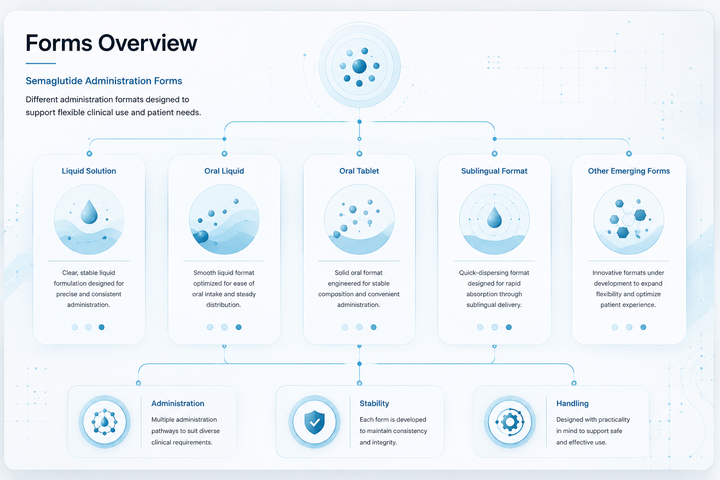
Injection forms

Formulation interpretation examines how a pharmaceutical presentation establishes the pathway between a drug substance and systemic biological exposure. For semaglutide, this framework begins with mechanism and GLP-1 biology, then considers formulation-dependent absorption and disposition through pharmacokinetics. Clinical pharmacology provides the broader framework for separating formulation characteristics from pharmacodynamic observations and downstream physiological endpoints.

Injectable and oral semaglutide represent different interfaces between the drug substance and biological compartments. Subcutaneous administration introduces a depot-associated absorption process, while oral administration exposes the molecule to the gastrointestinal environment and requires specialized conditions for systemic uptake. These distinctions can be examined alongside pharmacodynamics, GLP-1 biology, appetite regulation, and glycemic control without translating route differences into outcome claims.

The mechanistic concept also includes formulation-related variability. Differences in gastrointestinal physiology, absorption conditions, systemic exposure, metabolic state, and biological responsiveness can influence how a formulation is interpreted. Relevant domains include glycemic variability, insulin resistance, metabolic outcomes, and clinical trials. Formulation therefore functions as an upstream pharmacological variable rather than as an endpoint itself.

Formulation layer Mechanistic focus Physiological interface
Route Site of drug entry Subcutaneous or gastrointestinal
Absorption Systemic availability and timing Exposure formation
Downstream signaling GLP-1 receptor pharmacodynamics Endocrine and metabolic systems

Injectable Versus Oral Formulation: PK/PD Interpretation

Injectable and oral semaglutide differ mechanistically at the absorption interface. A subcutaneous formulation creates a local depot from which semaglutide enters systemic circulation, whereas oral semaglutide must traverse the gastrointestinal environment before systemic absorption. Pharmacokinetics describes these exposure processes, while pharmacodynamics describes receptor-mediated biological activity. Mechanism, GLP-1 biology, and clinical pharmacology connect these layers.

Oral semaglutide incorporates a formulation strategy intended to facilitate gastrointestinal absorption of a peptide molecule that would otherwise have limited oral bioavailability. The mechanistic analysis therefore includes gastric and intestinal conditions, local formulation behavior, epithelial transport, and systemic exposure. These processes can be distinguished from downstream pharmacodynamics and related physiological domains such as appetite regulation, glycemic control, and glycemic variability.

Comparative PK/PD interpretation should focus on exposure profiles, absorption pathways, temporal concentration patterns, receptor engagement, and biological response rather than assuming equivalence or superiority between formulations. Pharmacokinetics, pharmacodynamics, and clinical pharmacology can be integrated with metabolic outcomes, insulin resistance, and appetite regulation while keeping route, exposure, mechanism, and endpoint conceptually separate.

Formulation Primary absorption interface PK/PD consideration
Injectable Subcutaneous tissue Depot-associated systemic absorption
Oral Gastrointestinal tract Formulation-assisted peptide absorption
Both Systemic circulation GLP-1 receptor pharmacodynamics

Endocrine-Linked Formulation Considerations

Endocrine-linked formulation interpretation begins with the distinction between route-dependent exposure and downstream hormonal signaling. GLP-1 biology describes receptor-mediated physiology, while mechanism organizes molecular pathways. Pharmacokinetics then describes formulation-dependent exposure, and pharmacodynamics describes biological response. Clinical pharmacology provides the framework for integrating these endocrine layers without assigning formulation-specific outcomes.

Endocrine physiology intersects with glucose, insulin, energy balance, and gastrointestinal signaling. Formulation can alter the pathway by which the peptide reaches systemic circulation, but endocrine interpretation remains dependent on receptor distribution, signaling intensity, exposure over time, feedback physiology, and tissue responsiveness. Relevant contexts include insulin resistance, glycemic control, appetite regulation, and metabolic outcomes.

The endocrine framework therefore separates formulation variables from hormonal endpoints. A change in route, absorption environment, or exposure profile is a pharmacological characteristic; a downstream endocrine measurement is a physiological endpoint. Glycemic variability, type 2 diabetes, prediabetes, and clinical trials provide contextual domains, but none independently defines the mechanistic relationship between formulation and endocrine physiology.

Endocrine layer Formulation relationship
Exposure Route-dependent systemic concentration profile
Receptor signaling GLP-1-mediated pharmacodynamics
Hormonal context Feedback and metabolic physiology

Gastrointestinal-Linked Formulation Considerations

Gastrointestinal physiology is particularly relevant to oral semaglutide because the dosage form encounters the stomach and intestinal environment before systemic exposure develops. GLP-1 biology and mechanism establish receptor biology, while pharmacokinetics describes absorption and systemic disposition. Clinical pharmacology integrates formulation, biological environment, exposure, and temporal relationships without implying an outcome.

Peptide absorption through the gastrointestinal tract is mechanistically complex because proteins and peptides encounter luminal conditions, enzymatic processes, mucus, epithelial barriers, and limited passive permeability. Oral semaglutide uses a formulation approach involving the absorption enhancer SNAC to facilitate uptake. These processes are distinct from downstream pharmacodynamics, appetite regulation, glycemic control, and glycemic variability.

Gastrointestinal formulation interpretation also requires attention to variability in the biological environment. Gastric conditions, intestinal physiology, local exposure, formulation behavior, and systemic pharmacokinetics can all contribute to the complexity of oral peptide absorption. Relevant frameworks include pharmacokinetics, pharmacodynamics, mechanism, metabolic outcomes, and clinical trials. These variables describe biological context rather than a predetermined clinical effect.

GI component Mechanistic role PK relevance
Gastric environment Local formulation interface Influences absorption conditions
SNAC Absorption-enhancing excipient Facilitates oral peptide uptake
Intestinal barrier Epithelial transport interface Contributes to systemic availability

Appetite-Linked Formulation Considerations

Appetite regulation represents a pharmacodynamic domain downstream of GLP-1 receptor signaling, whereas formulation primarily determines how semaglutide reaches systemic circulation. Appetite regulation, GLP-1 biology, and mechanism therefore describe biological response pathways, while pharmacokinetics describes formulation-dependent exposure. Pharmacodynamics connects systemic exposure with receptor-mediated signaling without equating formulation with an appetite endpoint.

Central and peripheral appetite pathways integrate gastrointestinal signals, neural circuits, endocrine inputs, and metabolic state. Injectable and oral formulations differ in their absorption interfaces, but interpretation of appetite biology still requires separation of route, exposure, receptor signaling, and physiological context. Related domains include glycemic control, insulin resistance, metabolic outcomes, and obesity.

Appetite-linked formulation analysis can also incorporate exposure variability and endpoint definition. A pharmacokinetic difference concerns concentration over time, whereas an appetite endpoint reflects integrated neural, endocrine, gastrointestinal, and behavioral physiology. Clinical pharmacology, glycemic variability, weight management, and clinical trials can provide contextual evidence. Mechanistically, these layers should remain distinguishable even when they are evaluated within the same study.

Domain Mechanistic focus Formulation interface
Appetite Central and peripheral satiety signaling Downstream of systemic exposure
GI signaling Gut-brain communication Relevant to oral absorption context
PK Exposure over time Route-dependent

Metabolic-Linked Formulation Considerations

Metabolic formulation interpretation distinguishes route-dependent exposure from downstream regulation of glucose and energy metabolism. GLP-1 biology describes receptor signaling, while mechanism organizes molecular and cellular pathways. Pharmacokinetics describes formulation-associated exposure and pharmacodynamics describes biological activity. Related metabolic frameworks include insulin resistance and glycemic control.

Metabolic physiology includes glucose-dependent insulin secretion, glucagon regulation, hepatic glucose production, peripheral glucose utilization, energy balance, and lipid metabolism. Formulation influences the absorption interface rather than serving as a metabolic endpoint itself. Interpretation can therefore incorporate glycemic variability, metabolic outcomes, appetite regulation, and clinical pharmacology while preserving distinctions between exposure and physiological response.

Differences in baseline metabolic state can influence the context in which formulation-related PK/PD relationships are examined. Type 2 diabetes, prediabetes, and obesity encompass different physiological environments, while weight management represents another endpoint context. Evidence from clinical trials should therefore be interpreted according to formulation, exposure, biological mechanism, population characteristics, and endpoint definition rather than by formulation label alone.

Metabolic pathway Formulation-related interpretive layer
Glucose regulation Downstream pharmacodynamic context
Insulin signaling Receptor-mediated metabolic pathway
Energy balance Integrated appetite and metabolic physiology

Variability in Formulation-Related Response

Formulation-related variability can arise from differences in absorption environment, systemic exposure, biological responsiveness, metabolic state, and measurement timing. Pharmacokinetics describes concentration and disposition, while pharmacodynamics describes biological response. Clinical pharmacology, mechanism, and GLP-1 biology provide complementary frameworks for separating variability in formulation behavior from variability in downstream physiology.

Oral formulation introduces additional biological interfaces because gastrointestinal conditions can influence the environment surrounding peptide absorption. Injectable formulation instead involves subcutaneous absorption before systemic distribution. These route-specific variables can be considered alongside appetite regulation, glycemic control, glycemic variability, and insulin resistance. None of these variables alone establishes a formulation-specific outcome.

Population and study-level variability can further reflect differences in baseline physiology, body composition, metabolic state, concomitant biological processes, assay characteristics, and endpoint definitions. Relevant contexts include obesity, type 2 diabetes, prediabetes, and clinical trials. Mechanistic interpretation is therefore strongest when formulation, exposure, pathway, timing, and endpoint are evaluated as separate but connected variables.

Variability source Mechanistic dimension Interpretive context
GI environment Oral absorption conditions Gastrointestinal physiology
Systemic exposure PK variability Concentration over time
Biological response PD variability Metabolic and endocrine state

Formulations Versus Glycemic Endpoints

A formulation is a pharmaceutical characteristic, whereas a glycemic endpoint is a physiological measurement. Injectable and oral semaglutide can therefore be compared mechanistically through route, absorption, exposure, and receptor signaling without treating those properties as glycemic outcomes. Pharmacokinetics, pharmacodynamics, and clinical pharmacology provide the framework for maintaining this distinction, with GLP-1 biology describing relevant receptor physiology.

Glycemic endpoints include glucose concentrations, measures of glycemic variability, and other indicators of glucose regulation. Their interpretation involves insulin secretion, glucagon physiology, hepatic glucose production, peripheral glucose utilization, and metabolic context. Relevant frameworks include glycemic control, glycemic variability, insulin resistance, and metabolic outcomes. Formulation remains an upstream pharmacological variable rather than an endpoint.

A formulation-related PK difference may be mechanistically meaningful without being equivalent to a difference in glycemic physiology. Endpoint interpretation requires attention to study design, exposure, timing, baseline metabolic state, biological variability, and measurement methodology. Type 2 diabetes, prediabetes, and clinical trials provide contexts in which these distinctions can be studied. Mechanistic interpretation therefore avoids inferring endpoint behavior solely from formulation characteristics.

Concept Primary question
Formulation How is the drug presented and absorbed?
PK What exposure profile results?
Glycemic endpoint What glucose-related physiology is measured?

Formulations Versus Metabolic Endpoints

Metabolic endpoints describe physiological states or measurements involving glucose, energy balance, substrate utilization, or related pathways, whereas formulation describes pharmaceutical presentation. Mechanism, pharmacokinetics, and pharmacodynamics allow these levels to be connected without conflating them. GLP-1 biology provides a shared receptor framework, while clinical pharmacology organizes exposure-response interpretation.

Metabolic endpoints can reflect multiple simultaneous pathways, including insulin signaling, glucose regulation, appetite, energy expenditure, and lipid handling. Formulation affects the route by which semaglutide enters systemic circulation, while downstream metabolic physiology depends on receptor signaling and broader biological context. Relevant domains include insulin resistance, glycemic control, appetite regulation, and metabolic outcomes.

Interpretation can become more complex when formulation, exposure, and metabolic endpoints are examined simultaneously. Baseline physiology, temporal measurement, body composition, gastrointestinal context, and biological responsiveness can influence the observed relationship. Obesity, weight management, type 2 diabetes, and clinical trials represent relevant evidence contexts. A mechanistic framework therefore treats formulation as one variable within a larger exposure-response system.

Layer Example focus Interpretive distinction
Formulation Route and dosage form Pharmaceutical variable
PK/PD Exposure and receptor response Pharmacological bridge
Metabolic endpoint Glucose and energy physiology Physiological measurement

Formulations Versus Appetite Endpoints

Appetite endpoints represent integrated physiological and behavioral measurements, while formulation describes how semaglutide is presented and reaches systemic circulation. Appetite regulation and GLP-1 biology describe relevant signaling pathways, while pharmacokinetics describes exposure and pharmacodynamics describes downstream biological response. Mechanism and clinical pharmacology connect these levels.

Appetite physiology integrates hypothalamic and brainstem networks, gastrointestinal signals, circulating metabolic cues, and endocrine inputs. A formulation-related difference in absorption pathway therefore should not be treated as synonymous with an appetite endpoint. Related contexts include insulin resistance, glycemic control, metabolic outcomes, and obesity. These domains provide physiological context but remain distinct analytical categories.

Mechanistic evidence can examine whether formulation, exposure, receptor signaling, and appetite measurements are temporally and biologically aligned. Such interpretation requires attention to endpoint definitions and the distinction between subjective appetite measures, behavioral observations, metabolic variables, and pharmacodynamic biomarkers. Weight management, glycemic variability, and clinical trials may provide additional context. The formulation itself remains an upstream pharmacological characteristic rather than an appetite endpoint.

Domain What it represents
Formulation Pharmaceutical presentation and absorption pathway
Appetite endpoint Integrated hunger, satiety, or feeding physiology
PK/PD Exposure and biological signaling bridge

Multi-System Formulation Integration

A systems-level formulation model integrates route, absorption, systemic exposure, receptor signaling, endocrine physiology, gastrointestinal biology, appetite regulation, and metabolic pathways. GLP-1 biology provides receptor context, mechanism organizes biological pathways, and pharmacokinetics describes exposure. Pharmacodynamics and clinical pharmacology connect exposure with downstream physiological interpretation.

Injectable and oral formulations can therefore be represented as different entry pathways into a shared systemic pharmacology framework. The oral route adds gastrointestinal formulation and absorption variables, whereas the injectable route incorporates subcutaneous absorption. Downstream domains include appetite regulation, glycemic control, glycemic variability, and insulin resistance. The shared framework does not require identical exposure processes.

Multi-system integration also requires separation of formulation variables from clinical endpoints. Metabolic outcomes, obesity, weight management, type 2 diabetes, and prediabetes describe clinical or physiological contexts, while clinical trials provide evidence structures. Mechanistic interpretation is strongest when route, formulation, exposure, signaling, variability, and endpoint definitions are evaluated together.

System layer Formulation connection Interpretive role
Gastrointestinal Oral absorption interface Formulation-specific context
Systemic PK Exposure after absorption Pharmacological bridge
Endocrine/metabolic Downstream GLP-1 signaling Physiological interpretation
Appetite Central-peripheral signaling Integrated response domain

Frequently Asked Questions

Semaglutide formulation biology refers to the mechanistic study of how the pharmaceutical presentation influences the pathway from drug administration to systemic exposure and subsequent pharmacology. It includes route, dosage form, absorption environment, formulation components, molecular stability, pharmacokinetics, and pharmacodynamics. For a peptide such as semaglutide, formulation is especially relevant to how the molecule encounters biological barriers. This framework does not treat one formulation as inherently better or worse; it describes the biological processes that connect formulation characteristics with exposure and downstream receptor-mediated physiology.

Injectable and oral semaglutide can be distinguished by their absorption interfaces. A subcutaneous formulation establishes a local depot from which systemic absorption occurs, while an oral formulation must interact with the gastrointestinal environment before systemic uptake. Oral semaglutide also uses an absorption-enhancing formulation component, SNAC, to facilitate peptide absorption. Mechanistically, these differences are pharmacokinetic rather than automatically clinical. Interpretation should separate route, absorption, systemic exposure, receptor signaling, pharmacodynamic response, and physiological endpoints instead of inferring an outcome from formulation alone.

Pharmacokinetics and pharmacodynamics connect formulation characteristics with biological exposure and response. Pharmacokinetics describes processes such as absorption, distribution, metabolism, and elimination, while pharmacodynamics describes receptor engagement and downstream biological effects. Injectable and oral formulations can establish exposure through different absorption pathways, creating distinct pharmacokinetic considerations. Pharmacodynamic interpretation then examines how systemic exposure relates to GLP-1 receptor signaling and physiological responses. These frameworks allow formulation, exposure, mechanism, and endpoints to remain separate analytical concepts while still being evaluated as an integrated pharmacological system.

Endocrine-linked formulation considerations concern how route and exposure interface with hormonal physiology. Semaglutide-associated GLP-1 signaling exists within broader endocrine networks involving insulin, glucagon, glucose regulation, energy balance, and feedback systems. Formulation determines the pathway through which systemic exposure develops, while endocrine responses depend on receptor signaling, tissue responsiveness, physiological state, and temporal dynamics. Mechanistic interpretation therefore distinguishes pharmaceutical formulation from endocrine endpoints. A formulation characteristic may be part of an exposure-response model without independently establishing a specific hormonal outcome.

Gastrointestinal pathways are particularly relevant to oral semaglutide because the formulation must operate within the stomach and intestinal environment before systemic absorption occurs. Peptide molecules encounter luminal conditions, enzymatic processes, mucus, epithelial barriers, and limited membrane permeability. Oral semaglutide incorporates SNAC as an absorption-enhancing component, creating an additional formulation mechanism that facilitates uptake. These processes belong primarily to absorption and pharmacokinetics. They should be distinguished from later systemic GLP-1 receptor signaling and from downstream endocrine, metabolic, or appetite-related endpoints.

Appetite pathways represent downstream physiological processes rather than formulation characteristics themselves. GLP-1 signaling can participate in central and peripheral regulation of hunger, satiety, food intake, gastrointestinal signaling, and energy homeostasis. Formulation affects the route through which semaglutide reaches systemic circulation, while pharmacokinetics describes resulting exposure and pharmacodynamics describes biological signaling. Appetite-related interpretation therefore requires separation of formulation, exposure, receptor activity, and integrated physiological endpoints. Mechanistic analysis can connect these layers without assuming that a particular formulation necessarily produces a particular appetite outcome.

Metabolic pathways represent downstream physiological systems that can be examined after considering formulation and systemic exposure. GLP-1 receptor signaling participates in glucose-dependent insulin secretion, glucagon regulation, and broader metabolic control, while appetite and energy balance involve additional pathways. Injectable and oral formulations establish exposure through different absorption interfaces, but metabolic interpretation depends on pharmacodynamics and physiological context. Consequently, formulation should be treated as an upstream pharmacological variable rather than a metabolic endpoint. Glycemic measurements, insulin-related physiology, and energy-related endpoints require their own mechanistic definitions.

Formulation-related variability can arise from differences in absorption conditions, systemic exposure, biological responsiveness, metabolic state, gastrointestinal physiology, and measurement timing. Oral administration introduces gastrointestinal variables that do not apply in the same way to subcutaneous absorption, while both routes remain subject to pharmacokinetic and pharmacodynamic variability. Baseline physiology and endpoint definitions can also influence interpretation. Mechanistically, variability does not automatically indicate a formulation-specific clinical effect. It highlights the need to distinguish route, exposure, receptor signaling, physiological context, and measurement characteristics.

A formulation is a pharmaceutical characteristic, whereas a glycemic endpoint is a measurement of glucose-related physiology. Formulation concerns route, dosage form, absorption, and the resulting exposure pathway. Glycemic endpoints reflect processes such as glucose regulation, insulin secretion, glucagon signaling, hepatic glucose production, and peripheral glucose utilization. Pharmacokinetics and pharmacodynamics connect these layers but do not make them interchangeable. Therefore, a mechanistic comparison of formulations should not substitute formulation properties for glycemic measurements or infer a glycemic outcome solely from differences in pharmaceutical presentation.

Formulations describe how a drug substance is presented and delivered to the biological system, whereas metabolic endpoints describe physiological measurements or states involving glucose, energy balance, substrate utilization, or related processes. A formulation can influence absorption and systemic exposure, while metabolic endpoints reflect downstream biology involving multiple pathways. Pharmacokinetics and pharmacodynamics provide the bridge between these levels. Mechanistic interpretation therefore asks whether an observation concerns formulation, exposure, receptor signaling, or metabolism. Keeping these categories separate prevents pharmaceutical characteristics from being treated as direct substitutes for metabolic outcomes.

Formulation and appetite endpoints represent different levels of biological description. Formulation concerns route, dosage form, absorption conditions, and systemic exposure, whereas appetite endpoints describe hunger, satiety, food intake, or related neural and behavioral physiology. GLP-1 signaling can connect systemic exposure with appetite-related pathways, but the formulation itself is not an appetite measurement. Mechanistic interpretation therefore separates pharmaceutical presentation from pharmacokinetics, pharmacodynamics, and integrated appetite physiology. This distinction is important when evaluating evidence because an exposure characteristic cannot automatically be interpreted as an appetite outcome.

Mechanistic evidence explains how formulation characteristics connect with biological exposure and downstream signaling. Relevant evidence can include pharmaceutical formulation studies, absorption experiments, pharmacokinetic analyses, receptor biology, pharmacodynamic measurements, gastrointestinal physiology, and controlled clinical evidence examining predefined mechanisms or endpoints. This evidence helps distinguish direct formulation effects from broader physiological associations and measurement artifacts. Mechanistic interpretation does not require assuming that one formulation produces a particular clinical result. Its purpose is to clarify the biological sequence from dosage form and route through absorption, exposure, receptor signaling, and physiological context.