Incretin physiology • Integrated pathway

Semaglutide and the GLP-1 Pathway

Semaglutide is a long-acting GLP-1 receptor agonist whose pharmacology can be understood through the endogenous incretin pathway. GLP-1 signaling links nutrient sensing with pancreatic endocrine activity, gastrointestinal physiology, and neural regulation of appetite. This mechanism-focused framework connects receptor activation with broader clinical pharmacology, without reducing GLP-1 biology to a single metabolic endpoint.

The endogenous incretin system coordinates postprandial signals through GLP-1 secretion, receptor-mediated intracellular signaling, insulin regulation, glucagon modulation, gastric motility, and central appetite circuits. Semaglutide extends this signaling pharmacologically. Understanding pharmacodynamics alongside pharmacokinetics helps explain how receptor engagement relates to glycemic control, appetite regulation, and metabolic physiology.

GLP-1 pathway activity is therefore multidimensional rather than exclusively pancreatic. Gastrointestinal nutrient sensing communicates with endocrine tissues and neural networks involved in energy balance, while metabolic state influences pathway responses. These relationships provide context for appetite regulation, insulin resistance, type 2 diabetes, and weight management, with clinical evidence interpreted through clinical trials and broader metabolic outcomes.

GLP-1 Secretion and Incretin Physiology
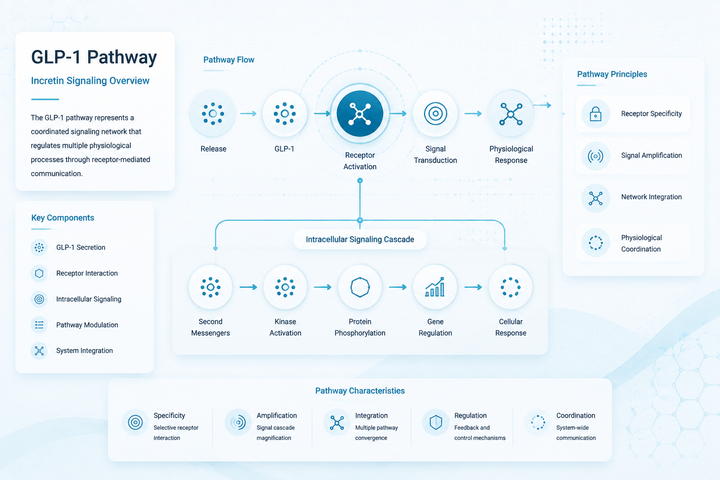
GLP-1 pathway

Endogenous GLP-1 is an incretin hormone produced predominantly by intestinal enteroendocrine L cells, particularly in distal intestinal regions, with secretion influenced by nutrient exposure and gastrointestinal signaling. Meal-associated carbohydrates, lipids, and amino acids can participate in nutrient-sensing processes that promote GLP-1 release. The hormone enters systemic circulation and interacts with GLP-1 receptors expressed across pancreatic, gastrointestinal, cardiovascular, and neural tissues. This physiological network forms a foundation for understanding GLP-1 biology without treating circulating hormone concentration as an isolated determinant of metabolic response.

GLP-1 secretion is integrated with intestinal nutrient sensing, enteric neural activity, bile-acid signaling, and other gastrointestinal mediators. Native GLP-1 has a relatively brief biological persistence because it is rapidly metabolized and cleared, meaning endogenous secretion operates through transient signaling pulses associated with nutrient availability. Pharmacological receptor agonism differs because molecular properties can produce sustained receptor engagement. The distinction between endogenous hormone physiology and drug-mediated receptor activation is important when considering clinical pharmacology, pharmacokinetics, and pharmacodynamics.

The incretin concept describes nutrient-dependent enhancement of pancreatic insulin secretion relative to comparable glucose exposure outside the gastrointestinal context. GLP-1 is one of the principal mediators of this phenomenon, although glucose-dependent insulinotropic polypeptide also contributes. GLP-1 pathway activity interacts with glycemic state, pancreatic beta-cell function, gastric physiology, and neural signaling. Consequently, the pathway has relevance to glycemic control, glycemic variability, and broader metabolic outcomes rather than representing a single isolated endocrine mechanism.

Physiological component Principal role Pathway relationship
Intestinal L cells GLP-1 secretion Nutrient sensing
GLP-1 receptor Signal transduction Target-tissue response
Pancreatic islets Insulin and glucagon regulation Glucose-dependent endocrine signaling

The GLP-1 Incretin System and Receptor Network

The GLP-1 receptor is a class B G protein-coupled receptor that translates extracellular GLP-1 or receptor-agonist binding into intracellular signaling. Receptor activation can stimulate adenylyl cyclase and increase cyclic AMP, with downstream effects involving protein kinase A and exchange proteins directly activated by cyclic AMP. Signal transduction is tissue-dependent because receptor density, intracellular coupling, cellular phenotype, and physiological state influence the resulting response. This receptor-level framework complements the broader mechanism of semaglutide and its pharmacological classification.

In pancreatic beta cells, GLP-1 receptor signaling amplifies glucose-dependent insulin secretory processes through coordinated intracellular pathways. In other tissues, receptor activation can influence neuronal signaling, gastrointestinal function, and vascular or cardiovascular physiology. These effects should be viewed as components of an interconnected receptor system rather than independent pharmacological actions. The relationship between receptor occupancy, downstream signaling, exposure, and biological response is central to pharmacodynamics, while systemic concentration and persistence are addressed through pharmacokinetics.

Semaglutide is structurally related to human GLP-1 but incorporates molecular modifications that increase resistance to enzymatic degradation and extend systemic persistence. Its pharmacological activity therefore reflects sustained GLP-1 receptor agonism rather than repeated recreation of the short-lived endogenous hormone profile. Receptor signaling remains dependent on cellular context and metabolic conditions. These principles provide mechanistic background for studying clinical pharmacology, insulin resistance, and metabolic responses associated with GLP-1 receptor activation.

Receptor feature Mechanistic significance
Class B GPCR Transduces extracellular GLP-1 signaling
Cyclic AMP signaling Links receptor activation to intracellular effectors
Tissue-specific coupling Shapes physiological response across organs

Pancreatic GLP-1 Receptor Signaling

Pancreatic GLP-1 receptor signaling is most clearly characterized in endocrine islet cells, where receptor activation influences beta-cell intracellular signaling and glucose-dependent insulin secretion. GLP-1 does not function as an independent glucose sensor; rather, its insulinotropic activity is strongly conditioned by ambient glucose concentration. Increased cyclic AMP can enhance secretory machinery and amplify nutrient-stimulated beta-cell responses. This endocrine mechanism contributes to the relationship between GLP-1 receptor agonism and glycemic control while remaining dependent on underlying pancreatic physiology.

Within beta cells, glucose metabolism increases ATP availability and contributes to membrane depolarization, calcium entry, and insulin granule exocytosis. GLP-1 receptor activation overlays this glucose-responsive machinery by increasing cyclic AMP-dependent signaling and facilitating insulin secretion when glucose concentrations provide an appropriate stimulus. Protein kinase A and exchange protein activated by cyclic AMP participate in downstream processes. This integration explains why GLP-1 signaling is better characterized as glucose-dependent amplification than as unrestricted stimulation of insulin release, a distinction relevant to clinical pharmacology.

Pancreatic GLP-1 signaling also interacts with glucagon-producing alpha cells, delta-cell somatostatin signaling, islet paracrine communication, and systemic metabolic state. The net endocrine response therefore emerges from coordinated cellular interactions rather than a single receptor event. Alterations in insulin sensitivity, beta-cell function, nutrient exposure, and glycemic status can modify pathway behavior. These concepts connect GLP-1 physiology with insulin resistance, type 2 diabetes, and the interpretation of pharmacodynamics.

Islet component GLP-1 pathway effect Physiological context
Beta cells Amplified glucose-dependent insulin secretion Nutrient and glucose availability
Alpha cells Modulation of glucagon signaling Glycemic and paracrine state
Delta cells Interaction with somatostatin networks Islet paracrine regulation

GLP-1 Signaling and Insulin Secretion

GLP-1 receptor activation enhances insulin secretion through intracellular second-messenger pathways that converge with glucose-stimulated beta-cell activity. Cyclic AMP accumulation can increase protein kinase A activity and engage exchange proteins activated by cyclic AMP, facilitating calcium-dependent exocytosis of insulin granules. The resulting process is not simply a direct receptor-to-insulin switch; it depends on glucose metabolism, membrane excitability, calcium dynamics, and beta-cell secretory competence. This provides mechanistic context for the relationship between GLP-1 signaling and glycemic control.

The glucose dependence of GLP-1-mediated insulinotropic activity is an important feature of incretin physiology. When glucose availability changes, the cellular environment controlling beta-cell depolarization, calcium influx, and granule fusion also changes. GLP-1 signaling modifies the efficiency of these processes rather than replacing glucose sensing itself. Consequently, receptor agonism should be understood within the broader endocrine architecture involving insulin sensitivity, hepatic glucose handling, pancreatic function, and nutrient flux. These relationships intersect with insulin resistance and glycemic variability.

Semaglutide produces pharmacological GLP-1 receptor stimulation with a persistence profile substantially different from endogenous GLP-1. Its observed insulin-related effects therefore reflect sustained receptor-mediated signaling superimposed on changing metabolic conditions. Pharmacokinetic exposure, receptor responsiveness, intracellular signaling, glucose concentration, and tissue physiology all contribute to the resulting pharmacodynamic profile. Understanding this distinction helps connect molecular receptor activity with pharmacokinetics, pharmacodynamics, and broader metabolic outcomes.

Signaling step Functional relationship
GLP-1 receptor activation Increases cyclic AMP signaling
Protein kinase A and EPAC Modulate beta-cell secretory machinery
Calcium-dependent exocytosis Facilitates insulin granule release

Glucagon Modulation Through the Incretin Pathway

GLP-1 pathway activity can modulate glucagon secretion through glucose-dependent and indirect mechanisms involving pancreatic islet signaling, insulin, somatostatin, and nutrient state. The relationship is more complex than a universal direct suppression of alpha-cell activity. During elevated glucose concentrations, GLP-1-associated signaling can contribute to reduced glucagon output, while the physiological response to low glucose involves multiple counter-regulatory systems. This context is essential for interpreting the relationship between incretin signaling and whole-body glucose homeostasis rather than viewing glucagon as an isolated target.

Alpha cells respond to local glucose concentrations, amino acids, neural inputs, insulin, and somatostatin, creating a highly integrated endocrine environment. GLP-1 receptor expression and direct receptor-mediated effects in alpha cells have been characterized differently across experimental systems, so glucagon modulation can involve both direct and paracrine pathways. Reduced glucagon signaling may decrease hepatic glucose production under appropriate metabolic conditions, linking pancreatic endocrine activity with hepatic glucose flux. These interactions provide mechanistic context for glycemic control and glycemic variability.

Semaglutide-associated glucagon effects therefore arise from pharmacological GLP-1 receptor agonism interacting with prevailing glucose concentrations, insulin signaling, nutrient availability, and islet physiology. The resulting metabolic phenotype reflects coordinated changes across pancreatic endocrine cells rather than a single linear pathway. Differences in receptor expression, cellular responsiveness, and metabolic state can influence observed responses. These principles are relevant when connecting receptor pharmacology with clinical pharmacology, type 2 diabetes, and metabolic outcomes.

Factor Relationship to glucagon
Glucose concentration Major determinant of alpha-cell counter-regulation
Insulin and somatostatin Important intra-islet paracrine modulators
GLP-1 signaling Contributes to context-dependent glucagon modulation

Gastrointestinal Signaling and Gastric Emptying

GLP-1 is closely connected with gastrointestinal physiology because intestinal nutrient sensing and hormone secretion form part of the same signaling network. GLP-1 receptor activation can influence gastric motor function, gastric emptying, intestinal motility, and postprandial nutrient delivery. Slower gastric emptying can alter the rate at which nutrients reach the small intestine and enter systemic circulation, thereby modifying postprandial glucose dynamics. This gastrointestinal component complements pancreatic endocrine effects and demonstrates why GLP-1 physiology extends beyond insulin secretion into integrated clinical pharmacology.

Gastric emptying is regulated by coordinated activity involving vagal pathways, enteric neurons, smooth muscle, interstitial cells of Cajal, gastrointestinal hormones, and nutrient composition. GLP-1 signaling can modify this network through receptor-mediated and neural mechanisms, but the magnitude and persistence of gastric effects may vary with physiological state and exposure. Gastrointestinal signaling therefore represents a dynamic interface between nutrient delivery and endocrine regulation. Its relationship with glycemic control reflects changes in the timing and pattern of nutrient appearance rather than a simple direct glucose-lowering pathway.

Semaglutide's prolonged receptor activity can influence gastrointestinal signaling within the broader pharmacodynamic profile of GLP-1 receptor agonism. The relationship between drug exposure and gastrointestinal response is shaped by receptor activation, tissue sensitivity, gastric motor physiology, and adaptation over time. This illustrates the importance of distinguishing pharmacokinetic exposure from downstream biological effect. Gastrointestinal mechanisms also connect with appetite and energy-balance signaling, providing a physiological bridge to appetite regulation, weight management, and pharmacodynamics.

Gastrointestinal component GLP-1-related function Metabolic connection
Gastric emptying Modulates nutrient delivery Postprandial glucose pattern
Enteric and vagal pathways Transmit gut signals Gut-brain communication
Intestinal nutrient sensing Coordinates incretin secretion Endocrine integration

Neural Appetite and Energy-Balance Pathways

GLP-1 signaling participates in neural regulation of food intake, satiety, reward processing, and energy balance through both peripheral-to-central communication and receptor activity within the nervous system. Relevant circuits include brainstem nuclei, hypothalamic networks, and higher-order pathways involved in motivation and reward. Vagal afferents can transmit gastrointestinal information to the nucleus tractus solitarius, while circulating and locally produced signals interact with central neuroendocrine systems. This architecture explains why GLP-1 receptor activity has a meaningful relationship with appetite regulation.

Neural GLP-1 pathways do not operate as a single appetite center. Brainstem and hypothalamic networks integrate hormonal signals with gastric distension, nutrient availability, visceral sensory information, and broader energy-status signals. GLP-1-related signaling can influence neuronal activity associated with satiety and feeding behavior, while reward-related circuits contribute additional dimensions to food intake regulation. The resulting physiology involves distributed networks rather than a single receptor location. These concepts connect with weight management, obesity, and the broader mechanism of GLP-1 receptor agonism.

Semaglutide's neural effects are pharmacological manifestations of GLP-1 receptor activation occurring alongside gastrointestinal and endocrine signaling. Systemic exposure, receptor access, neural sensitivity, gastrointestinal feedback, and metabolic state can all influence the integrated response. Appetite-related physiology should therefore be understood as one component of a gut-brain-endocrine network rather than an isolated behavioral effect. This framework provides mechanistic context for interpreting pharmacokinetics, pharmacodynamics, and evidence concerning metabolic outcomes.

Neural region or pathway Relevant function Signal integration
Nucleus tractus solitarius Visceral sensory integration Vagal and hormonal signals
Hypothalamic circuits Energy-balance regulation Metabolic and endocrine inputs
Reward-related networks Motivational aspects of feeding Food-related sensory and behavioral signals

GLP-1 Signaling and the Integrated Metabolic Response

The metabolic response to GLP-1 receptor activation emerges from coordinated changes in pancreatic insulin signaling, glucagon modulation, gastrointestinal nutrient delivery, appetite-related neural activity, and tissue-level energy metabolism. These components influence glucose flux, hepatic glucose production, nutrient partitioning, and energy intake through interconnected feedback systems. The pathway therefore cannot be reduced to one physiological effect. Its broader relevance includes relationships among insulin resistance, glycemic control, glycemic variability, and systemic metabolic regulation.

Insulin sensitivity influences how effectively changes in insulin secretion affect peripheral glucose disposal, while hepatic responsiveness influences the relationship between insulin and endogenous glucose production. Gastrointestinal signaling can alter the rate of nutrient appearance, and appetite-related neural pathways can modify energy intake. These processes interact continuously, meaning that a change in one component can alter the context in which another operates. Such systems-level physiology helps explain why GLP-1 receptor agonism has effects spanning endocrine, gastrointestinal, neural, and metabolic domains rather than one isolated tissue.

Semaglutide pharmacodynamics reflect the combined consequences of sustained GLP-1 receptor activation across these interconnected systems. Exposure-response relationships are influenced by receptor signaling, tissue sensitivity, baseline metabolic state, nutrient flux, and physiological adaptation. Clinical observations consequently represent the aggregate of molecular and organ-level mechanisms. Mechanistic interpretation can be placed alongside evidence from clinical trials, effectiveness overview, and metabolic outcomes without assuming that any single endpoint captures the complete GLP-1 pathway.

System Principal GLP-1-related effect Metabolic consequence
Pancreatic islets Insulin and glucagon modulation Glucose regulation
Gastrointestinal tract Nutrient-delivery modulation Postprandial metabolic pattern
Central nervous system Appetite and energy-balance signaling Energy-intake regulation

PK/PD Relevance to GLP-1 Receptor Activity

Pharmacokinetics describes the relationship between semaglutide exposure and processes governing absorption, distribution, metabolism, and elimination, whereas pharmacodynamics describes biological effects arising from GLP-1 receptor activation. These dimensions are related but not interchangeable. A sustained concentration profile can support prolonged receptor engagement, while downstream effects depend on receptor sensitivity, intracellular signaling, tissue distribution, and physiological state. This distinction provides a framework for understanding pharmacokinetics and pharmacodynamics within the broader GLP-1 pathway.

Semaglutide's molecular modifications increase resistance to enzymatic degradation and extend its systemic persistence compared with endogenous GLP-1. The resulting exposure profile differs from the short-lived pulses generated by physiological hormone secretion. However, concentration alone does not determine biological response. Receptor occupancy, signaling efficiency, tissue-specific expression, feedback mechanisms, and metabolic context contribute to the observed pharmacodynamic effect. These principles are central to clinical pharmacology and provide a molecular basis for interpreting variation between exposure and downstream physiological responses.

PK/PD relationships also help integrate endocrine, gastrointestinal, and neural effects because the same receptor agonist exposure can engage multiple physiological systems. Pancreatic signaling may influence insulin and glucagon dynamics, gastrointestinal activity can modify nutrient delivery, and neural pathways can influence appetite and energy balance. The aggregate response reflects these parallel mechanisms and their interactions. This systems perspective connects pharmacology with glycemic control, appetite regulation, and metabolic outcomes.

PK/PD concept GLP-1 pathway relevance
Systemic exposure Determines availability for receptor interaction
Receptor activation Initiates intracellular signaling
Downstream response Reflects tissue and physiological context

Endocrine, Gastrointestinal, and Neural Integration

GLP-1 physiology represents a coordinated gut-pancreas-brain signaling axis in which nutrient detection is translated into endocrine, gastrointestinal, and neural responses. Intestinal L cells respond to nutrients and contribute GLP-1 secretion, pancreatic islets interpret metabolic signals to regulate insulin and glucagon, and neural pathways integrate visceral and hormonal information with energy-balance circuits. The resulting network illustrates why GLP-1 receptor agonism should be considered a systems-level pharmacology concept rather than a pancreas-specific mechanism.

Gastrointestinal and neural communication occurs through overlapping hormonal, vagal, enteric, and central pathways. Gastric distension and nutrient delivery provide sensory information, while GLP-1 and other gut-derived mediators influence endocrine and neuronal activity. Pancreatic hormones then modify systemic nutrient handling, creating feedback that can affect subsequent signaling. These reciprocal relationships connect the gastrointestinal tract with appetite regulation, while endocrine effects intersect with glycemic control and insulin resistance.

Semaglutide engages this network through pharmacological GLP-1 receptor agonism, with downstream effects shaped by exposure, receptor signaling, organ physiology, and metabolic state. The integrated response can therefore include pancreatic endocrine modulation, gastrointestinal motor effects, and neural appetite signaling simultaneously. Clinical evidence reflects the combined expression of these mechanisms across populations and study settings. Mechanistic interpretation is supported by clinical trials, effectiveness overview, and broader weight management and type 2 diabetes contexts.

Organ system Primary pathway role Cross-system signal
Gut Nutrient sensing and GLP-1 secretion Hormonal and vagal signaling
Pancreas Insulin and glucagon regulation Metabolic feedback
Brain Appetite and energy-balance integration Neural and endocrine inputs

Variability in GLP-1 Pathway Responses

GLP-1 pathway responses can vary because receptor signaling occurs within a biological system influenced by genetics, metabolic phenotype, tissue receptor expression, gastrointestinal physiology, pancreatic function, and neural sensitivity. Differences in endogenous GLP-1 secretion do not necessarily predict proportional responses to a receptor agonist because pharmacological exposure bypasses some aspects of endogenous hormone production. Variation can therefore arise at multiple levels, from receptor binding and intracellular signaling through organ-level physiology and whole-body metabolic integration.

Metabolic state is particularly relevant because glucose concentration, insulin sensitivity, beta-cell function, hepatic glucose production, nutrient composition, gastric motility, and energy balance all influence the physiological environment in which GLP-1 signaling occurs. Gastrointestinal and neural responses may also adapt over time, creating differences between acute and sustained pathway activity. These factors provide context for understanding variation in glycemic variability, insulin resistance, appetite regulation, and other metabolic phenotypes.

Pharmacokinetic differences can contribute to variability by altering systemic exposure, while pharmacodynamic differences influence the relationship between exposure and receptor-mediated response. Study design, population characteristics, baseline disease state, concomitant physiological factors, and endpoint definitions can also affect observed effects in clinical research. Consequently, variability should be interpreted as a multidimensional pharmacological phenomenon rather than evidence of a single dominant mechanism. This perspective connects pharmacokinetics, pharmacodynamics, clinical trials, and metabolic outcomes.

Source of variability Potential pathway influence Interpretive domain
Metabolic phenotype Alters endocrine and nutrient signaling Physiology
Pharmacokinetic exposure Changes receptor availability PK
Tissue responsiveness Modifies downstream signaling PD

Frequently Asked Questions

GLP-1 is produced primarily by enteroendocrine L cells located throughout the intestinal tract, with important secretion associated with nutrient exposure. These cells detect dietary carbohydrates, fats, and amino acids through multiple nutrient-sensing mechanisms. GLP-1 can also be produced in certain neurons, particularly within the brainstem. After secretion, endogenous GLP-1 participates in pancreatic, gastrointestinal, cardiovascular, and neural signaling. Its physiological role therefore extends beyond the intestine and reflects communication between nutrient sensing and several organ systems involved in metabolic regulation.

The incretin system is a physiological network in which gastrointestinal nutrient exposure promotes hormonal signals that enhance glucose-dependent insulin secretion. GLP-1 is a major incretin hormone, while glucose-dependent insulinotropic polypeptide is another important component. Incretin signaling connects intestinal nutrient sensing with pancreatic islet function and broader metabolic regulation. The system also interacts with gastrointestinal motility, glucagon regulation, neural signaling, and energy balance. Semaglutide engages this biology pharmacologically through GLP-1 receptor agonism rather than reproducing the short-lived concentration pattern of endogenous GLP-1.

GLP-1 receptor signaling influences pancreatic islet physiology primarily through glucose-dependent modulation of endocrine secretion. In beta cells, receptor activation increases cyclic AMP signaling and can amplify glucose-stimulated insulin secretion through protein kinase A, EPAC, calcium handling, and secretory pathways. GLP-1-related signaling also participates in regulation of glucagon through direct and indirect islet mechanisms involving alpha cells, insulin, somatostatin, and glucose concentration. The overall pancreatic response therefore reflects coordinated endocrine and paracrine signaling rather than a single receptor effect.

GLP-1 enhances glucose-dependent insulin secretion by activating GLP-1 receptors on pancreatic beta cells and increasing intracellular cyclic AMP. Downstream signaling involving protein kinase A and exchange protein activated by cyclic AMP can facilitate calcium-dependent insulin granule exocytosis. The effect depends strongly on ambient glucose because GLP-1 signaling amplifies nutrient-stimulated beta-cell activity rather than functioning as an independent glucose sensor. Semaglutide produces this pharmacological receptor activation with greater persistence than endogenous GLP-1, creating a distinct exposure-response relationship within the overall endocrine pathway.

GLP-1 pathway activity can reduce glucagon secretion under conditions of elevated glucose, but glucagon regulation is more complex than a simple direct receptor-mediated suppression. Alpha cells integrate glucose, amino acids, insulin, somatostatin, neural inputs, and other metabolic signals. GLP-1 can influence this network through direct and paracrine mechanisms, with the resulting response depending on physiological context. Modulation of glucagon can affect hepatic glucose production and therefore contributes to the broader relationship between GLP-1 receptor activation and glucose homeostasis.

GLP-1 signaling can influence gastric motor activity and the rate at which gastric contents enter the small intestine. Gastric emptying is controlled by coordinated interactions among smooth muscle, enteric neurons, vagal pathways, gastrointestinal hormones, nutrient composition, and visceral sensory mechanisms. GLP-1 receptor activation can modify this network, changing the pattern of nutrient delivery and potentially influencing postprandial glucose dynamics. The gastrointestinal effect is therefore part of an integrated gut-endocrine system rather than an isolated action occurring independently of pancreatic and neural signaling.

GLP-1 participates in appetite regulation through interconnected peripheral and central pathways. Gastrointestinal signals can activate vagal afferent pathways that communicate with brainstem structures, while circulating and locally produced GLP-1-related signals interact with hypothalamic and other neural networks involved in energy balance. Reward and motivational circuits provide additional layers of regulation. These mechanisms integrate gastric distension, nutrient availability, hormonal signals, and metabolic state. Semaglutide engages GLP-1 receptors pharmacologically, so its appetite-related effects reflect receptor activation within this distributed gut-brain network.

GLP-1 receptor activation can produce an integrated metabolic response involving glucose-dependent insulin secretion, modulation of glucagon, altered gastric emptying, appetite-related signaling, and changes in nutrient handling. These mechanisms can influence glucose flux, hepatic glucose production, postprandial nutrient appearance, and energy intake. The overall response depends on metabolic state, pancreatic function, insulin sensitivity, gastrointestinal physiology, and receptor signaling. Consequently, metabolic effects should be interpreted as the combined outcome of endocrine, gastrointestinal, neural, and pharmacological processes rather than as one isolated biochemical event.

Pharmacokinetics describes semaglutide exposure over time, including processes affecting systemic availability and elimination, whereas pharmacodynamics describes biological effects resulting from GLP-1 receptor activation. Semaglutide's molecular structure provides greater resistance to enzymatic degradation and prolonged systemic persistence compared with endogenous GLP-1. However, exposure does not completely determine response because receptor sensitivity, tissue distribution, intracellular signaling, metabolic state, and physiological adaptation also contribute. PK and PD therefore provide complementary frameworks for interpreting how drug exposure becomes sustained receptor-mediated endocrine, gastrointestinal, and neural activity.

GLP-1 integrates endocrine pathways by linking intestinal nutrient sensing with pancreatic islet activity and systemic metabolic regulation. Intestinal L cells release GLP-1 in response to nutrient-related signals, while pancreatic beta and alpha cells respond within a network involving insulin, glucagon, somatostatin, glucose, and other metabolic inputs. Gastrointestinal and neural signals further modify this endocrine environment. The resulting physiology is bidirectional: nutrient availability influences GLP-1 signaling, while GLP-1-related activity alters endocrine and gastrointestinal processes that subsequently change systemic metabolic conditions.

The GLP-1 gut-brain axis describes interconnected hormonal, vagal, enteric, and central neural pathways through which gastrointestinal nutrient information influences brain activity and energy balance. Intestinal nutrient sensing and GLP-1 secretion can interact with vagal afferents that communicate with brainstem nuclei, while hypothalamic and reward-related networks integrate these signals with metabolic and behavioral information. Gastric distension, nutrient delivery, and endocrine mediators contribute additional inputs. Semaglutide engages GLP-1 receptors within this broader signaling architecture, linking gastrointestinal, endocrine, and neural pharmacology.

Variation in GLP-1 pathway responses can arise from differences in metabolic phenotype, pancreatic beta-cell function, insulin sensitivity, gastrointestinal physiology, neural signaling, receptor expression, intracellular responsiveness, and pharmacokinetic exposure. Endogenous GLP-1 secretion also differs from pharmacological receptor agonism, so native hormone concentrations do not necessarily predict responses to semaglutide. Study populations and endpoint definitions can further influence observed variability. GLP-1 response is therefore best understood as a multidimensional pharmacological phenotype resulting from interactions among drug exposure, receptor biology, organ physiology, and metabolic state.