Receptor pharmacology • Integrated PD

Semaglutide Pharmacodynamics — Receptor Binding, Endocrine Signaling & Metabolic Modulation

Semaglutide pharmacodynamics describes how GLP-1 receptor activation produces biological responses across pancreatic, gastrointestinal, neural and metabolic systems. Its primary pharmacological target is the GLP-1 receptor, a class B G protein-coupled receptor integrated with GLP-1 biology and broader mechanism. Pharmacodynamic interpretation connects receptor occupancy and signaling with insulinotropic activity, glucagon modulation, gastric effects, appetite pathways, and downstream glycemic control.

Semaglutide PD also depends on the relationship between systemic exposure and biological response. Concepts from pharmacokinetics therefore complement receptor pharmacology by describing how concentration changes influence pharmacodynamic intensity and persistence. At the physiological level, signaling involves pancreatic endocrine cells, gastrointestinal pathways, vagal and central neural circuits, and metabolic tissues. These interactions are relevant to insulin resistance, appetite regulation, and broader endocrine integration.

The pharmacodynamic profile can be considered across molecular, cellular, organ-system, and clinical-evidence levels. Receptor-mediated signaling influences glucose-dependent insulin secretion, glucagon dynamics, gastric emptying, satiety-related signaling, and energy-balance pathways. These mechanisms provide pharmacological context for type 2 diabetes, weight management, obesity, and observed findings in clinical trials, without reducing complex physiological outcomes to a single receptor-level effect.

Semaglutide Receptor Binding and GLP-1 Receptor Pharmacology
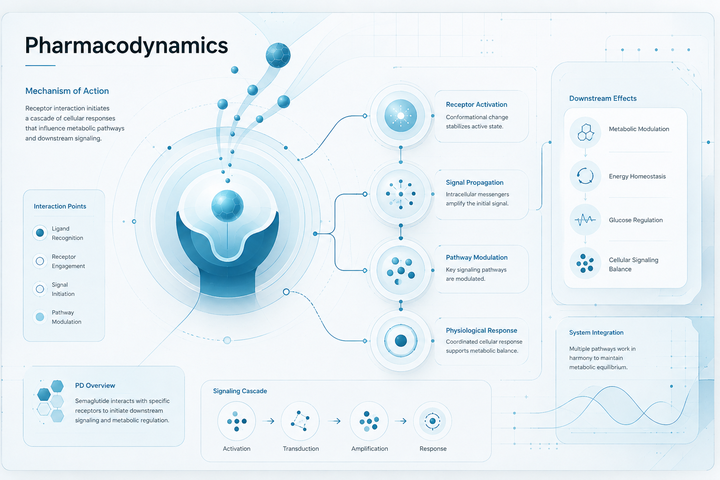
Receptor binding

Semaglutide is a peptide agonist of the GLP-1 receptor, a class B G protein-coupled receptor expressed in pancreatic islet cells and involved in gastrointestinal and neural signaling. Receptor pharmacology provides the molecular foundation for its GLP-1 biology and mechanism. Binding stabilizes receptor conformations associated with intracellular signaling, while receptor distribution determines which tissues can translate agonism into physiological responses. This framework is central to clinical pharmacology and interpretation of downstream endocrine effects.

GLP-1 receptor activation is coupled predominantly to Gs protein signaling, increasing adenylyl cyclase activity and intracellular cyclic AMP. In pancreatic beta cells, this signaling network interacts with glucose-dependent secretory machinery, calcium handling, protein kinase A, and exchange proteins directly activated by cAMP. The resulting pharmacodynamics connect molecular receptor activity with glycemic control and glycemic variability. Receptor activation can also engage tissue-specific pathways contributing to metabolic outcomes.

Receptor binding should not be interpreted as an isolated determinant of whole-body pharmacology. Cellular receptor density, coupling efficiency, intracellular signal amplification, ligand concentration, receptor desensitization, and tissue-specific physiology can influence the observed response. These factors help explain why GLP-1 receptor pharmacodynamics integrate with insulin resistance, appetite regulation, and gastrointestinal signaling. The same receptor class can therefore participate in distinct physiological processes depending on cellular context and downstream signaling architecture.

PD component Pharmacological role Physiological context
GLP-1 receptor Primary molecular target Pancreatic, gastrointestinal and neural signaling
Gs–adenylyl cyclase Generates cAMP signaling Intracellular signal transduction
PKA and EPAC pathways Amplify cAMP-dependent responses Endocrine secretory regulation

Intracellular Signaling and Signal Transduction

Following GLP-1 receptor activation, intracellular signaling begins with G protein coupling and increased cyclic AMP formation. Protein kinase A and EPAC-dependent pathways then modify proteins involved in vesicle trafficking, ion-channel activity, calcium mobilization, and transcriptional regulation. This molecular cascade connects GLP-1 biology with the broader mechanism of semaglutide. The signaling architecture is also relevant to clinical pharmacology, where receptor activation is interpreted alongside systemic exposure.

In beta cells, intracellular signaling remains strongly dependent on ambient glucose concentration. GLP-1 receptor agonism potentiates glucose-stimulated insulin secretion rather than functioning as a completely glucose-independent secretagogue. Calcium-dependent exocytosis, cAMP amplification, and metabolic sensing converge within the secretory pathway. These interactions provide mechanistic context for glycemic control, glycemic variability, and endocrine responses associated with type 2 diabetes.

Signal transduction is also shaped by receptor trafficking, phosphorylation, regulatory proteins, and potential desensitization processes. Consequently, pharmacodynamic output is not determined solely by circulating peptide concentration. The relationship between exposure and intracellular signaling is influenced by receptor accessibility and tissue responsiveness, concepts that integrate pharmacokinetics with metabolic outcomes. At the systems level, these pathways intersect with insulin resistance and appetite regulation through coordinated endocrine and neural signaling.

Signaling element Functional relationship PD relevance
cAMP Second-messenger amplification GLP-1 receptor signal propagation
PKA Protein phosphorylation Secretory and cellular responses
EPAC cAMP-dependent signaling Granule mobilization and exocytosis

Insulinotropic Response and Glucose-Dependent Endocrine Signaling

A major pharmacodynamic effect of GLP-1 receptor agonism is potentiation of glucose-dependent insulin secretion from pancreatic beta cells. Semaglutide receptor signaling increases cAMP-mediated amplification of nutrient-stimulated secretory pathways, linking molecular pharmacology with glycemic control. This response is embedded within GLP-1 biology and the broader mechanism, rather than representing an isolated endocrine action. Its physiological expression depends on glucose availability, beta-cell function, and metabolic context.

The insulinotropic response involves coordinated changes in intracellular cAMP, calcium signaling, vesicle priming, and exocytosis. GLP-1 receptor activation can therefore enhance the efficiency of glucose-stimulated insulin release without functioning as a simple direct replacement for endogenous insulin. These processes have particular pharmacodynamic relevance to type 2 diabetes, where impaired insulin secretion and insulin resistance coexist. The interaction between insulin secretion and insulin resistance influences the resulting systemic glucose response.

Endocrine pharmacodynamics also depend on temporal coupling between circulating glucose, hormone secretion, and tissue glucose disposal. Changes in insulin signaling can alter hepatic glucose production and peripheral substrate handling, while the overall response remains connected to glucagon dynamics and gastrointestinal signals. These mechanisms are examined within clinical pharmacology and reflected indirectly in glycemic variability and metabolic outcomes.

Endocrine component Primary PD effect System-level consequence
Beta cell Glucose-dependent insulin secretion Enhanced glucose disposal signaling
cAMP signaling Secretory pathway amplification Potentiation of nutrient-stimulated release
Insulin action Regulates substrate utilization Integrated glucose homeostasis

Glucagon Modulation and Endocrine Balance

Semaglutide pharmacodynamics includes modulation of glucagon secretion, with the direction and magnitude of the response influenced by prevailing glucose concentrations and metabolic conditions. GLP-1 receptor signaling can reduce inappropriate glucagon activity during hyperglycemic states, complementing insulinotropic effects. This endocrine interaction connects GLP-1 biology with glycemic control and the integrated mechanism of action. Glucagon regulation is therefore part of a broader endocrine feedback network.

Glucagon is a principal counter-regulatory hormone controlling hepatic glucose production through glycogenolysis and gluconeogenesis. Altered glucagon signaling can influence hepatic substrate flux and systemic glucose concentrations, particularly when combined with changes in insulin secretion. These pathways intersect with insulin resistance and type 2 diabetes, where abnormalities in both insulin and glucagon physiology may contribute to dysregulated glucose homeostasis. Pharmacodynamic interpretation therefore considers the balance between these pancreatic hormones.

Glucagon modulation is not a uniform receptor effect across every physiological state. Nutrient availability, autonomic input, intra-islet signaling, hepatic metabolism, and disease-associated endocrine changes can modify the observed response. This complexity links semaglutide PD with clinical pharmacology, glycemic variability, and metabolic outcomes. The resulting pharmacodynamic profile reflects coordinated regulation of glucose production and disposal rather than a single hormonal pathway.

Hormone PD relationship Metabolic pathway
Glucagon Context-dependent suppression Hepatic glucose production
Insulin Glucose-dependent potentiation Peripheral glucose disposal
Intra-islet signaling Coordinates alpha and beta cells Pancreatic glucose sensing

Gastric Emptying and Gastrointestinal Pharmacodynamics

Gastrointestinal pharmacodynamics is an important component of GLP-1 receptor agonism. Semaglutide can influence gastric motility and the rate at which gastric contents enter the small intestine, creating a physiological connection between GLP-1 biology, mechanism, and postprandial glucose handling. Gastric emptying is regulated through enteric, autonomic, hormonal, and neural pathways, so its pharmacodynamic expression reflects coordinated gastrointestinal physiology rather than receptor activity alone.

Changes in gastric emptying can modify the appearance of nutrients in the circulation and thereby influence postprandial glucose excursions. This provides a mechanistic bridge between gastrointestinal signaling and glycemic control or glycemic variability. The effect can interact with pancreatic insulin and glucagon responses, making gastrointestinal PD part of an integrated endocrine network. These relationships are relevant to clinical pharmacology and interpretation of metabolic physiology.

Gastric effects can also vary with physiological adaptation, meal composition, underlying gastrointestinal function, and the duration of receptor stimulation. Consequently, gastric emptying should not be treated as a fixed pharmacodynamic endpoint. It forms one component of a broader network involving appetite regulation, insulin resistance, and metabolic outcomes. Pharmacodynamic studies therefore distinguish acute gastrointestinal responses from longer-term systemic metabolic effects.

GI process Pharmacodynamic relationship Downstream context
Gastric emptying Modulation of gastric-to-intestinal transit Postprandial nutrient appearance
Enteric signaling Coordinates motility GI endocrine integration
Postprandial glucose Affected by nutrient delivery rate Glycemic dynamics

Appetite Signaling and Gastrointestinal–Neural Integration

Semaglutide pharmacodynamics extends beyond pancreatic endocrine tissues into neural circuits involved in hunger, satiety, reward, and energy-balance regulation. GLP-1 receptor signaling in peripheral and central pathways can modify communication between gastrointestinal nutrient sensing and brain networks. This framework connects GLP-1 biology with appetite regulation and the broader mechanism. Neural pharmacodynamics therefore contributes to systemic metabolic responses without being reducible to a single central receptor population.

Gastrointestinal signals can reach the brain through circulating mediators, vagal afferents, enteric pathways, and endocrine communication. GLP-1 receptor activation participates within this network, where sensory information is integrated with hypothalamic and brainstem circuits governing food intake and autonomic physiology. These pathways provide context for weight management and obesity, while also intersecting with metabolic outcomes through changes in energy balance.

Neural PD is inherently distributed and context dependent. Receptor expression, neuronal connectivity, hormonal feedback, nutrient state, and adaptive responses can alter the relationship between receptor activation and behavioral or metabolic outputs. Integration with pharmacokinetics is therefore important when considering exposure over time, while clinical pharmacology provides a framework for connecting molecular signaling with observed physiological endpoints. This multilevel organization explains why appetite-related PD involves several interacting pathways.

Neural component PD function Physiological integration
Vagal afferents Transmit GI sensory signals Gut–brain communication
Brainstem circuits Integrate visceral signals Satiety and autonomic responses
Hypothalamic networks Coordinate energy balance Appetite and metabolic regulation

Metabolic Modulation Across Glucose and Energy-Balance Pathways

The metabolic pharmacodynamics of semaglutide emerges from coordinated effects on pancreatic hormone secretion, hepatic glucose regulation, gastrointestinal signaling, and energy-balance pathways. These mechanisms connect insulin resistance with glycemic control and broader metabolic outcomes. GLP-1 receptor activation modifies several physiological processes simultaneously, meaning systemic metabolic responses represent the integrated consequence of multiple downstream pathways rather than a single biochemical event.

Changes in insulin and glucagon signaling can alter hepatic glucose flux, while gastrointestinal and neural effects influence nutrient delivery and energy intake. These interactions create feedback between endocrine and metabolic compartments. The pharmacodynamic framework therefore overlaps with type 2 diabetes, weight management, and obesity. Differences in baseline metabolic state can modify the magnitude and temporal profile of these responses, contributing to heterogeneity in observed endpoints.

Longer-term metabolic pharmacodynamics may also reflect adaptation in endocrine signaling, energy balance, substrate utilization, and tissue responsiveness. These processes are distinct from immediate receptor-mediated events but remain mechanistically connected to them. Clinical pharmacology, clinical trials, and effectiveness overview provide complementary perspectives on how mechanistic PD translates into measurable physiological outcomes without implying that one pathway determines every clinical endpoint.

Metabolic domain PD mechanism Integrated outcome domain
Hepatic glucose flux Insulin and glucagon modulation Glucose homeostasis
Energy balance GI and neural signaling Body-weight physiology
Peripheral metabolism Endocrine signal integration Substrate handling

Exposure–Response Relationships in Semaglutide Pharmacodynamics

Exposure–response analysis describes how semaglutide concentrations relate to measurable pharmacodynamic endpoints. The framework connects pharmacokinetics with receptor-mediated mechanism and clinical pharmacology. Depending on the endpoint, concentration may be related to insulinotropic activity, glucagon modulation, gastric effects, appetite signaling, or metabolic measures. Pharmacodynamic models can therefore distinguish exposure, biological response, and downstream physiological outcome.

The exposure–response relationship may not be linear across all concentration ranges or endpoints. Receptor occupancy, signal amplification, physiological feedback, receptor adaptation, and maximal response capacity can produce nonlinear relationships. This is particularly relevant when comparing short-lived biochemical responses with longer-term metabolic endpoints such as glycemic control or metabolic outcomes. The appropriate pharmacodynamic model depends on the biological endpoint and its temporal relationship to circulating exposure.

Exposure–response interpretation also requires attention to delays between molecular exposure and physiological output. Gastrointestinal, endocrine, neural, and metabolic pathways can introduce different effect compartments and response kinetics. Consequently, clinical trials may measure endpoints that integrate repeated pharmacodynamic processes rather than instantaneous receptor activity. This distinction helps connect glycemic variability, appetite regulation, and systemic outcomes with the underlying concentration–effect relationship.

Exposure–response feature Mechanistic basis Interpretive implication
Concentration–effect relationship Receptor-mediated signaling Links systemic exposure with PD
Nonlinearity Receptor and physiological feedback Response may not scale proportionally
Effect delay Multistep signaling pathways Exposure and endpoint may be temporally separated

Pharmacodynamic Variability and Biological Context

Pharmacodynamic variability reflects differences in biological response despite related systemic exposure. Factors include receptor expression, intracellular signaling efficiency, pancreatic beta-cell function, insulin sensitivity, gastrointestinal physiology, autonomic signaling, and metabolic state. These determinants connect semaglutide PD with insulin resistance, type 2 diabetes, and obesity. Variation can therefore arise from pharmacology at the receptor, tissue, organ, and systems levels.

Disease biology can alter the relationship between GLP-1 receptor activation and downstream physiological responses. Differences in glucose regulation, endocrine reserve, gastric function, neural signaling, and energy balance may modify specific PD endpoints. These mechanisms are relevant to glycemic control, glycemic variability, and appetite regulation. Importantly, variability in one pharmacodynamic domain does not necessarily imply equivalent variability across every other domain.

Pharmacodynamic heterogeneity can also reflect exposure differences, making PK and PD difficult to separate without integrated analysis. Concentration measurements, biomarker responses, receptor biology, and clinical endpoints may therefore provide complementary information. Pharmacokinetics, clinical pharmacology, and clinical trials help contextualize these relationships, while effectiveness overview describes observed outcomes without assuming that every difference is caused by receptor-level pharmacology.

Variability source Potential PD influence Relevant domain
Receptor biology Signal generation and amplification Molecular pharmacology
Metabolic state Hormonal and glucose responses Endocrine physiology
GI and neural physiology Motility and appetite signaling Systems pharmacodynamics

PK/PD Integration and Persistence of Pharmacodynamic Effects

Semaglutide pharmacodynamics cannot be interpreted fully without considering pharmacokinetic exposure. Concentration over time establishes the input to receptor-mediated signaling, while PD describes the resulting biological response. The relationship between these domains is explored through pharmacokinetics, clinical pharmacology, and GLP-1 biology. Receptor activation, intracellular amplification, and downstream physiology can each contribute to the temporal separation between exposure and observed effect.

Persistent exposure can support sustained receptor-mediated signaling, but the duration of a pharmacodynamic endpoint may differ from the duration of measurable systemic concentration. Signal amplification, receptor trafficking, endocrine feedback, gastrointestinal adaptation, and tissue-level response kinetics can all affect persistence. These principles help explain relationships among mechanism, glycemic control, glycemic variability, and metabolic outcomes.

Integrated PK/PD models can distinguish concentration-driven effects from delayed or indirect responses. Such models may incorporate effect compartments, Emax relationships, turnover processes, or biomarker dynamics depending on the endpoint. This approach is useful for interpreting evidence from clinical trials and understanding how molecular pharmacology relates to type 2 diabetes, weight management, and obesity without treating clinical endpoints as direct measurements of receptor occupancy.

PK/PD element Description Relationship to physiology
Systemic exposure Concentration available for receptor interaction Pharmacological input
Receptor signaling Transduces molecular exposure Cellular response
Effect compartment Represents delayed response Temporal PD integration

Frequently Asked Questions

Semaglutide is a GLP-1 receptor agonist that interacts with the extracellular and transmembrane regions of the class B G protein-coupled GLP-1 receptor. Receptor engagement stabilizes conformations associated with intracellular signaling, particularly Gs-mediated adenylyl cyclase activation and cyclic AMP generation. The resulting signal can influence protein kinase A, EPAC, calcium handling, and secretory processes. Receptor binding is therefore the initiating molecular event within a larger pharmacodynamic sequence involving pancreatic endocrine cells, gastrointestinal pathways, neural circuits, and systemic metabolic physiology.

Semaglutide activates GLP-1 receptor signaling that predominantly involves Gs protein coupling, stimulation of adenylyl cyclase, and increased intracellular cyclic AMP. cAMP subsequently regulates protein kinase A and EPAC pathways, which influence calcium dynamics, vesicle trafficking, protein phosphorylation, and secretory machinery. In pancreatic beta cells, these processes amplify glucose-stimulated insulin secretion. Additional regulatory mechanisms, including receptor phosphorylation, trafficking, and signal attenuation, can modify the duration and magnitude of intracellular responses. Thus, pharmacodynamic signaling extends beyond simple receptor occupancy.

Semaglutide produces an insulinotropic response through GLP-1 receptor activation on pancreatic beta cells. Receptor-mediated cAMP signaling amplifies intracellular pathways involved in glucose-stimulated insulin secretion, including calcium-dependent exocytosis and secretory granule mobilization. The response is strongly influenced by ambient glucose concentration, making it physiologically distinct from a continuously active, glucose-independent secretagogue. Beta-cell functional capacity, insulin sensitivity, nutrient availability, and broader endocrine conditions can influence the observed response. Insulinotropic activity is therefore one component of an integrated glucose-regulatory pharmacodynamic network.

Semaglutide can modulate glucagon secretion through GLP-1-related endocrine signaling, with the observed response influenced by glucose concentration, nutrient status, intra-islet communication, and metabolic context. Reduced inappropriate glucagon activity during elevated glucose conditions can complement increased glucose-dependent insulin secretion, affecting hepatic glucose production. Glucagon pharmacodynamics are therefore closely connected to insulin physiology rather than operating independently. The magnitude and direction of glucagon responses may vary according to underlying metabolic state, pancreatic endocrine function, and other physiological feedback mechanisms.

Semaglutide can influence gastric motility and gastric emptying through GLP-1-related gastrointestinal and neural pathways. Altered movement of gastric contents into the small intestine changes the rate at which nutrients become available for absorption, which can modify postprandial glucose dynamics. Gastric emptying is regulated by several interacting mechanisms, including enteric nerves, autonomic pathways, gastrointestinal hormones, and visceral sensory signaling. Consequently, the pharmacodynamic effect is context dependent and may change with physiological adaptation, meal characteristics, gastrointestinal function, and the duration of receptor stimulation.

Semaglutide can influence appetite through GLP-1 receptor pathways involving gastrointestinal sensory signaling, vagal afferents, brainstem circuits, and central neural networks involved in hunger and satiety. These pathways integrate information about nutrients, gastrointestinal distension, endocrine signals, and energy balance. The resulting pharmacodynamic response is distributed across multiple neural and peripheral compartments rather than being attributable to a single brain region. Receptor expression, neural connectivity, metabolic state, and physiological feedback can all influence how GLP-1 signaling is translated into changes in appetite-related physiology.

Semaglutide pharmacodynamics influence several interconnected metabolic pathways through changes in insulin secretion, glucagon regulation, gastrointestinal nutrient delivery, appetite signaling, and energy balance. Pancreatic endocrine effects can alter hepatic glucose production and peripheral glucose disposal, while gastrointestinal and neural pathways affect nutrient intake and postprandial physiology. These mechanisms interact with insulin sensitivity, glucose homeostasis, and substrate metabolism. The overall metabolic response therefore represents the combined activity of multiple endocrine, gastrointestinal, neural, and cellular pathways rather than a single biochemical mechanism.

The principal endocrine pathway involves GLP-1 receptor activation with downstream effects on pancreatic beta- and alpha-cell signaling. Increased glucose-dependent insulin secretion and context-dependent glucagon modulation contribute to regulation of circulating glucose and hepatic glucose production. Gastrointestinal endocrine signals and neural communication also participate in the broader response. These pathways interact with autonomic regulation, nutrient sensing, and metabolic feedback. Consequently, semaglutide pharmacodynamics can be viewed as an integrated endocrine network involving pancreatic hormones, gastrointestinal signals, neural pathways, and peripheral metabolic processes.

The gastrointestinal–neural axis refers to communication between the digestive tract and nervous system through vagal afferents, enteric neural circuits, visceral sensory pathways, circulating mediators, and central brain networks. GLP-1 receptor signaling participates in this communication and can influence gastric motility, nutrient sensing, satiety signaling, and autonomic responses. Semaglutide pharmacodynamics therefore include interactions between peripheral gastrointestinal physiology and central neural processing. The axis helps explain why receptor activation can produce coordinated gastrointestinal, appetite-related, endocrine, and metabolic responses across different biological compartments.

An exposure–response relationship describes how systemic semaglutide concentrations relate to a measurable pharmacodynamic endpoint. Depending on the endpoint, exposure may be associated with changes in insulinotropic activity, glucagon regulation, gastrointestinal physiology, appetite signaling, or metabolic biomarkers. The relationship may be nonlinear because of receptor occupancy, signal amplification, physiological feedback, maximal response capacity, and adaptation. Delayed effects can also occur when several biological steps separate circulating concentration from the measured endpoint. Pharmacokinetic and pharmacodynamic data are therefore complementary when interpreting concentration–effect relationships.

Pharmacodynamic variability can arise from differences in receptor biology, intracellular signal transduction, pancreatic beta-cell function, insulin sensitivity, glucose regulation, gastrointestinal physiology, autonomic signaling, and neural pathways. Systemic exposure can also vary, making pharmacokinetic and pharmacodynamic sources of variability difficult to distinguish without integrated measurements. Differences in disease state, metabolic phenotype, baseline hormone concentrations, and physiological adaptation may further influence specific endpoints. Importantly, variability in one pharmacodynamic domain does not necessarily predict equivalent variability in another, because different tissues and pathways have distinct regulatory mechanisms.

Pharmacodynamics provides the mechanistic bridge between semaglutide exposure and observed biological or clinical endpoints. Receptor activation, intracellular signaling, pancreatic hormone modulation, gastrointestinal effects, neural pathways, and metabolic responses form a causal framework for interpreting measurements obtained in clinical studies. Pharmacodynamic biomarkers can help connect molecular activity with changes in glucose regulation, appetite-related physiology, and metabolic parameters. However, clinical outcomes are multidimensional and cannot always be inferred directly from receptor activity. Clinical evidence therefore integrates pharmacology with study design, population characteristics, endpoint definitions, and observed physiological responses.

Mayo Clinic — Semaglutide Overview NHS — Semaglutide Information MedlinePlus — Semaglutide Drugs.com — Semaglutide Monograph PubMed — Semaglutide Studies