GLP-1 receptor agonism • Integrated physiology

Semaglutide Mechanism of Action

Semaglutide is a long-acting GLP-1 receptor agonist whose mechanism integrates pancreatic, gastrointestinal, and neural signaling. Its relationship to GLP-1 biology explains glucose-dependent insulin secretion, glucagon modulation, and effects on gastric physiology. The resulting pharmacology is characterized through pharmacodynamics and clinical pharmacology, linking receptor activation with measurable metabolic responses.

At the pancreatic level, semaglutide enhances glucose-dependent insulin secretion and suppresses inappropriate glucagon signaling during elevated glucose exposure. Gastrointestinal and central effects contribute to changes in appetite regulation and gastric emptying, while downstream changes influence glycemic control and energy balance. These pathways interact rather than operating as isolated mechanisms within human physiology.

Semaglutide's prolonged systemic exposure reflects specialized molecular properties described by pharmacokinetics, while concentration-dependent biological activity is addressed through pharmacodynamics. Mechanistic research provides the biological foundation for effects observed in type 2 diabetes and weight management, while clinical trials establish how these mechanisms translate into measured clinical endpoints.

GLP-1 Receptor Pathway
GLP-1 action

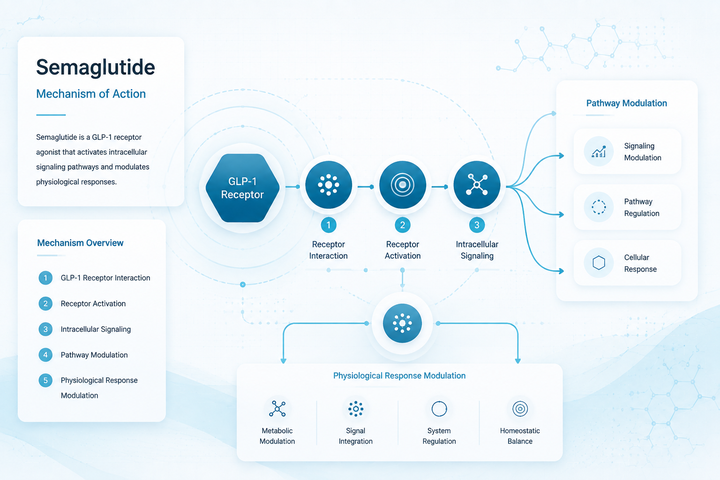
Semaglutide produces its primary biological effects through agonism of the glucagon-like peptide-1 receptor, a class B G protein-coupled receptor expressed in pancreatic islet cells and multiple neural and peripheral tissues. The endogenous incretin system is described in GLP-1 biology, where nutrient exposure stimulates GLP-1 secretion from intestinal enteroendocrine cells. Semaglutide reproduces selected receptor-mediated actions while resisting rapid enzymatic degradation. This prolonged receptor stimulation alters intracellular signaling, including cyclic AMP-dependent pathways, ultimately modifying hormone secretion and physiological processes involved in glucose and energy homeostasis.

GLP-1 receptor activation is coupled predominantly to stimulatory G proteins, increasing intracellular cyclic AMP and activating downstream protein kinase and exchange-protein signaling. In pancreatic beta cells, these pathways amplify insulin granule exocytosis when glucose concentrations provide an appropriate metabolic signal. The receptor is therefore not simply an on-off insulin switch; its insulinotropic effect remains strongly dependent on ambient glucose. Detailed pharmacodynamics describes how receptor activation, drug concentration, tissue exposure, and biological response are related, while clinical pharmacology connects these molecular events with observed physiological effects.

The same receptor system participates in pancreatic alpha-cell regulation, gastrointestinal signaling, and neural circuits involved in feeding behavior. Consequently, semaglutide's mechanism is multidimensional rather than restricted to glucose lowering. Changes in glycemic control, appetite, gastric function, and broader metabolic outcomes emerge from overlapping receptor-mediated pathways. Mechanistic interpretation must also distinguish direct receptor effects from secondary consequences, such as changes in circulating nutrients or body weight. This distinction is important when translating molecular pharmacology into clinical observations from controlled studies and longer-term outcome research.

Pathway Principal mechanism Physiological consequence
GLP-1 receptor G protein-coupled receptor activation Incretin-mediated signaling
Beta cell Cyclic AMP-dependent amplification of secretion Glucose-dependent insulin release
Peripheral and neural tissues Receptor-mediated signaling Gastrointestinal and appetite-related effects

Insulin Secretion and Beta-Cell Signaling

Semaglutide enhances insulin secretion through GLP-1 receptor signaling in pancreatic beta cells. When glucose enters beta cells and undergoes metabolism, intracellular ATP rises and initiates electrical and calcium-dependent processes that support insulin granule exocytosis. GLP-1 receptor activation increases cyclic AMP and amplifies this glucose-triggered secretory response. This explains why semaglutide is described as glucose dependent rather than as a direct substitute for endogenous insulin. The molecular relationship between receptor stimulation and hormone secretion forms a central component of its pharmacodynamic profile in metabolic disease.

The insulinotropic effect can influence both fasting and postprandial glucose physiology, although the magnitude of change depends on baseline glycemia, endogenous beta-cell function, nutrient exposure, and concurrent metabolic conditions. Research on glycemic control examines average glucose exposure, while glycemic variability addresses fluctuations around that average. Semaglutide's mechanism affects both dimensions indirectly through coordinated changes in insulin, glucagon, gastrointestinal physiology, and energy intake. These pathways are biologically connected, but each represents a distinct measurable component of glucose regulation.

Beta-cell signaling occurs within a broader metabolic environment shaped by insulin sensitivity, hepatic glucose production, adipose tissue metabolism, and nutrient availability. In individuals with substantial insulin resistance, increasing endogenous insulin secretion does not eliminate resistance at peripheral tissues; instead, semaglutide modifies several determinants of glucose homeostasis simultaneously. This distinction is important mechanistically because improvements in glycemia may reflect combined changes in pancreatic secretion, glucagon activity, food intake, gastric physiology, and body weight rather than a single isolated increase in insulin output.

Component Cellular event Metabolic role
GLP-1 receptor Increased cyclic AMP signaling Amplifies glucose-triggered secretion
Beta cell Calcium-dependent granule exocytosis Insulin release
Systemic metabolism Improved glucose disposal and reduced hepatic glucose drive Lower glucose exposure

Glucagon Regulation and Hepatic Glucose Homeostasis

Glucagon is a pancreatic alpha-cell hormone that promotes hepatic glucose production through glycogenolysis and gluconeogenesis. Semaglutide influences glucagon physiology through GLP-1 receptor-mediated signaling, with suppression particularly relevant when circulating glucose is elevated. This complements its insulinotropic activity: insulin favors glucose storage and utilization, whereas reduced glucagon signaling decreases hepatic glucose output. The balance between these hormones is therefore central to the drug's glucose-lowering mechanism. The relationship can be understood alongside GLP-1 biology and broader clinical pharmacology.

Glucagon regulation is context dependent and cannot be represented as continuous suppression under every physiological condition. Nutrient availability, autonomic signaling, amino acids, circulating glucose, and pancreatic islet status all influence alpha-cell secretion. Semaglutide modifies this network through incretin receptor activity, contributing to lower inappropriate glucagon exposure during hyperglycemia. The resulting effect on hepatic glucose production complements beta-cell insulin secretion and helps explain changes observed in glycemic control. Mechanistically, the coordinated insulin-glucagon relationship is more informative than examining either hormone in isolation.

Changes in glucagon also intersect with energy metabolism because hepatic glucose output is connected to glycogen storage, gluconeogenic substrate availability, and insulin sensitivity. In metabolic disease characterized by insulin resistance, abnormal glucagon physiology can contribute to fasting hyperglycemia. Semaglutide's influence on this axis occurs alongside effects on food intake and body weight, making the final metabolic phenotype multifactorial. Studies of metabolic outcomes therefore capture consequences of an integrated endocrine response rather than a direct pharmacological effect on the liver alone.

Hormone Semaglutide-related signaling Primary physiological effect
Insulin Glucose-dependent stimulation Promotes glucose disposal and storage
Glucagon Reduced inappropriate secretion during elevated glucose Reduces hepatic glucose production
Combined axis Coordinated islet signaling Improves glucose homeostasis

Gastric Emptying and Gastrointestinal Signaling

Semaglutide affects gastrointestinal physiology through GLP-1 receptor pathways that can delay gastric emptying, particularly during early exposure. Slower transfer of gastric contents into the small intestine can reduce the rate at which ingested nutrients appear in the circulation, influencing postprandial glucose excursions. This mechanism is distinct from pancreatic insulin secretion but interacts with it by altering the timing and magnitude of nutrient exposure. Gastrointestinal signaling is therefore an important component of semaglutide pharmacodynamics rather than merely an explanation for gastrointestinal adverse effects.

The gastric effect involves neural and enteric signaling as well as endocrine communication between the gastrointestinal tract and central nervous system. Native GLP-1 is part of a broader nutrient-sensing network that includes vagal afferent pathways and other gut peptides. Semaglutide can modify these signals through sustained receptor activation, contributing to changes in meal-related satiety and gastrointestinal motility. These mechanisms intersect with appetite regulation and can influence glycemic variability by changing the temporal pattern of nutrient absorption.

The magnitude of gastric-emptying effects is not necessarily constant over time. Physiological adaptation can occur, and the contribution of delayed emptying to longer-term glycemic or weight outcomes may differ from its contribution during early exposure. This distinction is important because semaglutide's overall clinical effects cannot be attributed exclusively to gastric emptying. Its central appetite signaling, pancreatic endocrine effects, and changes in energy intake operate concurrently. The resulting physiology is best considered an integrated GLP-1 response, with individual pathways contributing differently according to context and endpoint.

Gastrointestinal component Mechanistic effect Physiological implication
Gastric emptying Slower movement of gastric contents Modifies nutrient delivery
Enteric signaling GLP-1-related neural communication Influences gastrointestinal motility
Postprandial physiology Altered nutrient appearance Modifies meal-related glucose excursions

Appetite Regulation and Central Neural Pathways

Semaglutide influences appetite through GLP-1 receptor signaling in neural networks involved in hunger, satiety, reward, and meal termination. Relevant receptors and signaling pathways occur within brain regions associated with energy-homeostasis regulation, while peripheral GLP-1 signals can reach the central nervous system through neural and circulating routes. The resulting physiological effect is not simply generalized appetite suppression; it involves altered integration of hunger cues, satiety signals, meal-related sensory information, and nutrient status. These mechanisms are examined within the broader field of appetite regulation.

Central GLP-1 receptor activation can influence hypothalamic and brainstem circuits that integrate peripheral metabolic information. Pathways involving proopiomelanocortin-related signaling and other neuropeptide systems contribute to the regulation of food intake and energy expenditure. Semaglutide also interacts indirectly with gastrointestinal signals generated during nutrient ingestion. Consequently, changes in food intake reflect communication among the gastrointestinal tract, vagal pathways, brainstem nuclei, and higher-order neural networks rather than a single anatomical receptor population. These processes contribute to the energy-balance changes observed in weight-focused clinical research.

The appetite mechanism has particular relevance to weight management and obesity, but mechanistic interpretation should distinguish reduced energy intake from downstream changes in body composition. Weight change can alter insulin sensitivity, lipid metabolism, and other metabolic variables, creating secondary physiological effects. Studies of metabolic outcomes therefore capture both direct receptor-mediated physiology and indirect consequences of altered energy balance. Neural appetite signaling is one component of the overall mechanism, operating alongside pancreatic and gastrointestinal pathways rather than independently.

Neural domain Mechanistic role Physiological effect
Hypothalamic circuits Energy-homeostasis signaling Modulation of hunger and satiety
Brainstem pathways Integration of visceral signals Meal-related responses
Reward-related networks Integration of food-related cues Changes in feeding behavior

Integrated Metabolic Effects

Semaglutide's metabolic effects emerge from coordinated changes in pancreatic hormones, nutrient delivery, appetite, and energy intake. Enhanced glucose-dependent insulin secretion and reduced inappropriate glucagon signaling influence hepatic and peripheral glucose metabolism, while gastrointestinal and neural pathways alter nutrient exposure and food consumption. These mechanisms can collectively improve glucose homeostasis and modify body-weight trajectories. The resulting physiological profile is broader than direct glucose lowering, which is why metabolic outcomes encompass several distinct domains rather than a single biochemical endpoint.

Changes in energy intake and body weight can secondarily affect insulin sensitivity, adipose tissue metabolism, hepatic lipid handling, and inflammatory signaling. These downstream effects may influence insulin resistance and other cardiometabolic markers. However, causal attribution requires care because a measured metabolic change may result from direct receptor activity, weight reduction, altered caloric intake, improved glycemia, or combinations of these processes. Mechanistic studies therefore complement clinical outcome trials by clarifying biological pathways without assuming that every observed association represents a direct molecular action of semaglutide.

The integrated model also explains why semaglutide can affect several physiological domains simultaneously in people with type 2 diabetes or those studied for weight management. Changes in glucose exposure, appetite, gastric physiology, and body weight can reinforce one another through feedback mechanisms. Evidence from clinical trials tests whether these mechanistic effects translate into predefined endpoints, while effectiveness overview research examines outcomes in broader populations. Mechanistic coherence supports biological plausibility but does not substitute for endpoint-specific clinical evidence.

Mechanism Immediate physiological effect Potential downstream domain
Insulin and glucagon modulation Improved glucose regulation Glycemic outcomes
Appetite signaling Reduced energy intake Body-weight and metabolic outcomes
Gastrointestinal signaling Altered nutrient delivery Postprandial physiology

Pharmacokinetics and Pharmacodynamics

Semaglutide's mechanism cannot be separated from its prolonged pharmacokinetic profile. Structural modification increases albumin binding and reduces susceptibility to enzymatic degradation, extending systemic exposure relative to native GLP-1. The resulting concentration-time profile is described through pharmacokinetics, including absorption, distribution, metabolism, and elimination. These properties sustain GLP-1 receptor activation over an extended period and create a relationship between exposure and physiological response that differs substantially from the short-lived endogenous peptide. Prolonged exposure also contributes to gradual attainment and decline of systemic concentrations after changes in administration.

Pharmacodynamics describes what semaglutide does to biological systems as receptor exposure changes. Relevant endpoints include insulin secretion, glucagon regulation, gastric motility, appetite signaling, glucose concentrations, and body weight. Concentration-response relationships are not necessarily linear across all effects because receptor signaling, physiological adaptation, and downstream feedback processes can modify apparent exposure-response behavior. Detailed pharmacodynamics therefore provides a bridge between molecular receptor activity and observed biological outcomes, while clinical pharmacology integrates these findings with human exposure and clinical measurements.

Pharmacokinetic variability can arise from differences in body composition, renal or hepatic physiology, formulation, absorption, concomitant conditions, and other biological factors, although semaglutide generally exhibits predictable population-level behavior. Importantly, exposure variability does not map perfectly onto clinical response because pharmacodynamic sensitivity also varies. This helps explain why similar concentrations do not guarantee identical changes in appetite, glycemia, gastrointestinal symptoms, or weight. Mechanistic interpretation consequently requires both exposure data and biological endpoint measurements rather than relying on pharmacokinetics alone.

PK/PD domain Semaglutide characteristic Mechanistic relevance
Distribution Extensive albumin binding Prolonged systemic exposure
Elimination Slow clearance relative to native GLP-1 Sustained receptor stimulation
Pharmacodynamics Concentration-dependent receptor activity Endocrine, gastrointestinal, and neural effects

Endocrine Integration Across Metabolic Tissues

Semaglutide modifies an endocrine network in which pancreatic, gastrointestinal, hepatic, adipose, and neural signals continuously communicate about nutrient availability and energy status. GLP-1 receptor activation is central, but downstream physiology includes changes in insulin, glucagon, gastric function, appetite, and energy intake. These processes interact with insulin sensitivity and hepatic glucose production, creating an integrated metabolic response. The endocrine framework described in GLP-1 biology therefore extends beyond the pancreas and incorporates multiple organs participating in glucose and energy homeostasis.

In pancreatic islets, the insulin-to-glucagon relationship influences hepatic glucose flux. In the gastrointestinal tract, nutrient sensing contributes to incretin and vagal signaling. In the central nervous system, appetite circuits integrate hormonal and visceral information. Adipose tissue and skeletal muscle then respond to altered nutrient availability and insulin signaling, influencing substrate utilization and storage. These pathways help explain why semaglutide can affect insulin resistance, body weight, and glycemic control through both direct and secondary mechanisms rather than through one endocrine target alone.

The integrated endocrine model also highlights the difference between mechanistic endpoints and clinical outcomes. Changes in insulin concentrations, glucagon exposure, gastric emptying, or appetite may provide evidence that receptor pathways are active, but they do not independently establish effects on cardiovascular or long-term metabolic outcomes. Those questions require outcome-specific evidence. Research categorized under clinical trials and metabolic outcomes therefore complements mechanistic studies by testing whether biological changes translate into measurable health-related endpoints in defined populations.

Organ system Relevant signaling Integrated role
Pancreas Insulin and glucagon Glucose homeostasis
Gut GLP-1 and visceral signaling Nutrient sensing and gastric physiology
Brain GLP-1 receptor neural signaling Energy intake and appetite regulation

Gastrointestinal–Neural Signaling Axis

The gastrointestinal tract and central nervous system form a bidirectional signaling network that helps regulate food intake, gastric motility, and postprandial metabolism. Semaglutide engages this network through GLP-1 receptor pathways located in peripheral and neural tissues. Nutrient sensing in the intestine generates hormonal and neural information that is integrated through vagal afferents and brainstem pathways before reaching broader appetite-regulating circuits. This framework connects gastric physiology with appetite regulation and explains why gastrointestinal and central effects can occur concurrently.

Vagal afferent signaling provides one route by which visceral information reaches the nucleus of the solitary tract and related brainstem structures. GLP-1 receptor activity in these networks can influence gastric motility and meal termination signals. Higher-order hypothalamic circuits then integrate these signals with hormonal information concerning energy availability. Semaglutide's effects are consequently distributed across a network rather than confined to one anatomical site. This network physiology is particularly relevant to understanding changes in food intake and postprandial responses observed in mechanistic and clinical studies.

Gastrointestinal signaling also affects glucose kinetics because the rate of gastric emptying influences the delivery of carbohydrates and other nutrients to the small intestine. Changes in this process can alter the timing of glucose appearance and insulin responses, contributing to differences in glycemic variability. At the same time, central appetite pathways influence total energy intake over longer periods. The combination means that short-term gastrointestinal effects and longer-term energy-balance effects can coexist without being physiologically identical. Mechanistic analyses therefore separate acute gastric effects from sustained changes in feeding behavior and metabolic state.

Axis component Signal pathway Functional effect
Gut Nutrient and GLP-1 signaling Gastrointestinal feedback
Vagus and brainstem Visceral afferent communication Meal-related signal integration
Central circuits Hypothalamic and appetite networks Energy-intake regulation

Mechanistic Variability and Biological Response

Although semaglutide targets a defined receptor, biological responses vary because receptor signaling occurs within heterogeneous physiological systems. Differences in baseline glycemia, beta-cell reserve, insulin sensitivity, gastrointestinal motility, body composition, neural appetite signaling, and concurrent metabolic disease can modify the magnitude of downstream effects. Pharmacokinetic differences also contribute to variability in systemic exposure, as described in pharmacokinetics. Consequently, receptor activation does not produce an identical physiological response across all individuals or all endpoints.

The relationship between exposure and response is further complicated by adaptation. Gastrointestinal effects can change over time, while alterations in body weight can subsequently modify insulin sensitivity and energy expenditure. Changes in glucose control may also reduce the physiological stimulus for insulin secretion as hyperglycemia improves. These feedback mechanisms mean that pharmacodynamic effects evolve rather than remaining static. Research in pharmacodynamics and clinical pharmacology therefore evaluates both immediate receptor effects and delayed downstream responses.

Variability is also visible in clinical endpoints. Studies of weight management and type 2 diabetes report group-level distributions that include differing degrees of weight and glycemic change. These distributions should not be interpreted as evidence of a single deterministic biological pathway. Factors such as adherence, background treatment, disease duration, and trial characteristics can influence observed outcomes alongside intrinsic biology. Mechanistic variability therefore represents the interaction of molecular pharmacology, physiology, disease state, and study context rather than an unexplained inconsistency.

Source of variability Biological influence Relevant outcome
Baseline beta-cell function Insulin secretory capacity Glycemic response
Gastrointestinal physiology Motility and nutrient delivery Postprandial effects
Neural appetite signaling Satiety and food-intake regulation Energy-balance response

Mechanism in Clinical Evidence

Mechanistic plausibility is established through receptor pharmacology, human physiology studies, and pharmacokinetic-pharmacodynamic analyses, while clinical relevance is evaluated through controlled trials. Semaglutide studies have examined glycated hemoglobin, body weight, glucose measures, gastrointestinal effects, and cardiovascular endpoints. Clinical trials therefore provide the empirical bridge between GLP-1 receptor activation and observed outcomes. Mechanism explains why these effects may occur, but the magnitude, durability, and clinical importance of each outcome must be determined independently through appropriately designed evidence.

For diabetes-related outcomes, mechanistic pathways involving insulin, glucagon, gastric emptying, and food intake can explain changes in glycemic control. For weight-related outcomes, central appetite signaling and reduced energy intake provide a biological rationale for changes observed in weight management studies. However, the relative contribution of each pathway cannot always be quantified directly in clinical trials. Changes in body weight may themselves produce secondary metabolic effects, making causal decomposition more complex than identifying a single receptor-mediated pathway.

Clinical evidence also tests whether mechanistic effects extend to broader outcomes such as cardiovascular events or other metabolic outcomes. These endpoints involve multiple biological systems and cannot be attributed solely to GLP-1 receptor activation without considering mediated and independent pathways. The effectiveness overview perspective further distinguishes controlled trial efficacy from routine-care observations. A complete mechanism-of-action interpretation therefore integrates molecular pharmacology, human physiology, randomized evidence, and longer-term outcome data while maintaining clear boundaries between biological explanation and demonstrated clinical effect.

Evidence layer Primary question Typical evidence
Molecular pharmacology How does receptor activation occur? Receptor and signaling studies
Human physiology What biological effects follow? PK/PD and metabolic studies
Clinical outcomes Do effects translate into measurable endpoints? Randomized clinical trials

Frequently Asked Questions

Semaglutide activates the glucagon-like peptide-1 receptor, a G protein-coupled receptor involved in pancreatic, gastrointestinal, and neural signaling. Receptor activation increases intracellular cyclic AMP and modifies downstream signaling pathways. In pancreatic beta cells, this amplifies glucose-triggered insulin secretion, while other receptor populations influence glucagon regulation, gastric physiology, and neural circuits involved in appetite. Semaglutide is structurally modified to resist rapid degradation, allowing sustained receptor exposure. Its mechanism therefore represents prolonged pharmacological stimulation of a physiological incretin pathway rather than direct replacement of endogenous GLP-1.

Semaglutide increases insulin secretion through GLP-1 receptor activation in pancreatic beta cells, primarily when glucose concentrations provide an appropriate metabolic stimulus. Receptor signaling increases cyclic AMP and amplifies intracellular pathways involved in insulin granule exocytosis. This glucose-dependent characteristic distinguishes semaglutide from therapies that provide insulin independently of endogenous glucose sensing. The resulting insulin response contributes to lower circulating glucose, but its magnitude depends on beta-cell function, ambient glucose, insulin sensitivity, nutrient exposure, and other physiological factors. Insulin secretion is therefore one component of a broader integrated metabolic mechanism.

Semaglutide can reduce inappropriate glucagon secretion during elevated glucose exposure through GLP-1-related pancreatic signaling. Glucagon normally promotes hepatic glucose production through glycogenolysis and gluconeogenesis, so reduced glucagon activity can complement glucose-dependent increases in insulin secretion. This creates a coordinated endocrine effect in which insulin promotes glucose utilization and storage while lower glucagon signaling reduces hepatic glucose output. Glucagon regulation is influenced by glucose concentration, nutrient availability, autonomic signals, and pancreatic alpha-cell physiology, so semaglutide's effect is context dependent rather than equivalent to continuous glucagon suppression.

Semaglutide can delay gastric emptying through GLP-1 receptor-mediated gastrointestinal and neural signaling. Slower movement of gastric contents into the small intestine changes the rate at which nutrients become available for absorption and can therefore modify postprandial glucose excursions. Gastric effects can also contribute to meal-related satiety through communication among the gastrointestinal tract, vagal afferents, brainstem structures, and central appetite circuits. The magnitude of gastric-emptying effects may change over time, and delayed emptying is only one part of semaglutide's mechanism alongside pancreatic endocrine and central neural pathways.

Semaglutide influences appetite through GLP-1 receptor signaling in neural networks that integrate hunger, satiety, visceral information, reward-related cues, and nutrient status. Relevant pathways include brainstem and hypothalamic circuits, together with peripheral gastrointestinal signals transmitted through neural and endocrine routes. The resulting change in food intake reflects altered integration of multiple signals rather than simple generalized appetite suppression. Reduced energy intake can subsequently affect body weight and metabolic physiology. These direct neural effects and indirect consequences of altered energy balance are related but should be distinguished when interpreting mechanistic studies.

Semaglutide's metabolic effects result from coordinated changes in insulin secretion, glucagon regulation, gastric physiology, appetite, and energy intake. Improved glucose regulation can reduce hyperglycemic exposure, while altered food intake and body weight can subsequently affect insulin sensitivity, lipid metabolism, and other metabolic variables. Some effects are direct consequences of GLP-1 receptor signaling, whereas others arise secondarily from changes in nutrient intake or body weight. This distinction matters when interpreting metabolic outcomes because a measured change does not necessarily represent a direct molecular action on the tissue where that endpoint is observed.

Semaglutide's pharmacokinetics determine how the molecule is absorbed, distributed, exposed to tissues, and eliminated, while pharmacodynamics describes the biological effects associated with that exposure. Structural modification produces strong albumin binding and resistance to rapid enzymatic degradation, resulting in prolonged systemic exposure compared with native GLP-1. Sustained exposure supports extended receptor activation, but concentration does not translate into a perfectly linear clinical response because receptor signaling, physiological feedback, adaptation, and disease characteristics affect pharmacodynamic outcomes. Mechanistic interpretation therefore requires both exposure measurements and biological response data.

Mechanistic response varies because GLP-1 receptor signaling operates within biological systems that differ among individuals. Relevant factors include baseline glycemia, beta-cell reserve, insulin sensitivity, gastrointestinal motility, body composition, neural appetite signaling, concomitant metabolic conditions, and pharmacokinetic exposure. Physiological adaptation can also alter some responses over time. Clinical outcomes further depend on treatment persistence, background therapy, disease duration, and study conditions. Consequently, identical receptor agonism does not produce an identical magnitude of insulin secretion, appetite change, gastrointestinal response, body-weight change, or glycemic effect in every individual.

The principal endocrine pathway is GLP-1 receptor signaling, with important downstream effects involving pancreatic insulin and glucagon. These hormones regulate hepatic glucose production, peripheral glucose disposal, and nutrient storage. Gastrointestinal endocrine signals interact with neural pathways that communicate information about nutrient availability and meal ingestion. Changes in food intake and body weight can then modify insulin sensitivity, adipose metabolism, and hepatic substrate handling. Semaglutide therefore operates within an interconnected endocrine network rather than a single hormone pathway. The observed metabolic phenotype reflects both direct receptor activity and secondary physiological adaptations.

Gastrointestinal signaling contributes through changes in gastric motility, nutrient delivery, visceral afferent communication, and meal-related satiety. GLP-1 receptors participate in pathways connecting the gastrointestinal tract with the enteric nervous system, vagal afferents, brainstem nuclei, and central appetite networks. Semaglutide can slow gastric emptying and modify the timing of nutrient appearance in the circulation, influencing postprandial glucose physiology. Gastrointestinal signals also contribute to appetite regulation, so gut effects interact with central mechanisms. These pathways operate alongside pancreatic insulin and glucagon effects rather than replacing them.

Central appetite regulation involves interconnected brainstem, hypothalamic, and higher-order neural networks that integrate hormonal, visceral, and sensory information. GLP-1 receptor signaling within these systems can influence meal termination, satiety, hunger-related signaling, and responses to food-associated cues. Hypothalamic pathways involving neuropeptide systems participate in energy-homeostasis regulation, while brainstem circuits process visceral information arriving through peripheral nerves. Semaglutide's appetite effects therefore emerge from network-level signaling rather than activation of one isolated brain region. Changes in energy intake can subsequently generate secondary effects on body weight and metabolism.

Clinical evidence supports the biological relevance of semaglutide's mechanism through consistent findings across pharmacodynamic studies and randomized trials. Studies demonstrate effects on glycemic measures, body weight, gastrointestinal physiology, and other metabolic endpoints that are biologically compatible with GLP-1 receptor activation. However, individual clinical outcomes may reflect several mechanisms operating simultaneously, including insulin and glucagon regulation, appetite signaling, gastric effects, and secondary consequences of weight change. Clinical trials therefore establish observed outcomes, while mechanistic studies explain their biological plausibility. The two evidence layers answer related but distinct questions.